


Article overview
Most of your product discovery now happens somewhere you don’t own (ChatGPT, Google, etc.)
Diagnose before you buy an e-commerce product discovery solution.
In terms of solutions: Peec.ai is the cheapest way to find out whether ChatGPT names you when shoppers ask your category’s buying questions. Dialog suits catalogs where shoppers don’t yet have the vocabulary to search well. Nosto raises basket size. Octane AI earns its place only on small or genuinely novel catalogs.
Introduction
Generative AI has changed the whole product discovery process for shoppers.
Outside your website, LLMs like ChatGPT are increasingly popular. A recent Rithum study based on a survey of US and UK shoppers, revealed that more than 8 in 10 shoppers under 44 have used an LLM as part of their shopping journey in the last three month.
On online stores, AI shopping assistants are introducing a new way for clients to shop, reducing the need for rock-solid navigation and search.
This article covers both halves of the process: what happens on your domain and what happens outside.
We break down what product discovery actually is, with examples; how to work out which part of yours is broken, using numbers you already have; and the tools (including AI options) worth paying for in each case.
Summary table
Platform | Use case | Starting price | Shopify rating | G2 rating |
|---|---|---|---|---|
Peec.ai | Off-site LLM visibility tracking | From $95/mo (50 prompts daily, 3 models). 7-day trial, self-serve. | Not a store app | 4.8/5 (20) |
Dialog | On-site AI shopping assistant | Free tier at $0, paid from $249/mo (Starter, to 25,000 visitors). Free trial, self-serve on Shopify. | 5.0 (32) | 5/5 (10) |
Luigi’s Box | Internal search | Not published. 30-day free trial and self-serve signup, but a real number needs a quote. | 4.2 (10) | 4.8/5 (425) |
Nosto | Product recommendations | Not published. No free trial, no self-serve; enterprise quote. | 4.8 (60) | 4.6/5 (235) |
Octane AI | Recommendation quiz | From $50/mo (Basic, 400 credits, max 2 quizzes). 14-day trial, self-serve. | 4.9 (182) | 4.2/5 (9) |
What is e-commerce product discovery?
Product discovery is the part of the shopping journey where the candidate set gets narrowed.
Some examples of what falls inside it:
A shopper asks ChatGPT which boot suits flat feet under $150, and gets four names back.
She searches Google for “best hiking boots for wide feet”, and reads a roundup that mentions you.
She types “waterproof hiking boots wide fit” into your search box.
She filters a category page down to her size and a price ceiling.
She reads three product pages side by side to work out what “full-grain leather” changes.
And what falls outside it:
A prospecting ad that introduces your brand is demand creation, not discovery, because there’s no candidate set yet to narrow.
Checkout, shipping and returns come after the narrowing is done.
Notice that only the first three of those five examples happen on your website.
How to diagnose your product discovery bottleneck?
Not sure where to start to improve your product discovery?
Answer these five questions:
Are you visible where the narrowing happens? Take the ten questions a shopper would ask before buying in your category. Ask them in ChatGPT, Gemini and Perplexity. Write down who gets named. If you’re absent from most, that’s your bottleneck. Reproduce in Google to measure where your SEO sits.
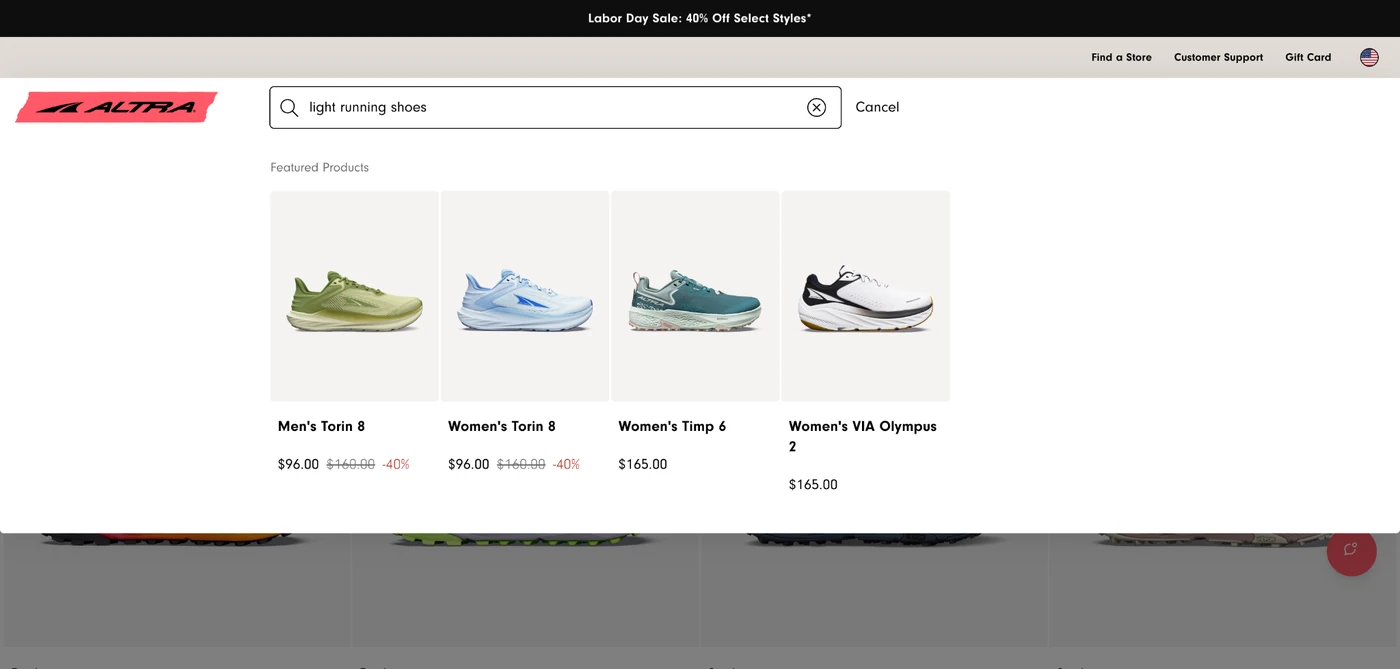
Does your search box work? Check your search analytics: zero-result rate, search refinement rate (how often someone edits a query before clicking anything) and search exit rate. A zero-result rate above a few percent, or heavy refinement, means shoppers are telling you exactly what they want and your search doesn’t understand them.
Do shoppers who never search find anything? Look at products viewed per session and the share of sessions that reach any product page at all. If most visitors bounce off category pages, you might have a navigation and architecture problem.
Do shoppers reach the product and stall? Healthy product page traffic with a weak add-to-cart rate on technical or high-consideration items usually means the shopper can’t tell your options apart. Check your support inbox for pre-purchase “which one should I get” messages. If your team answers the same comparison question all day, shoppers are hitting a wall your product pages don’t clear. This is the gap a shopping assistant closes.
Is discovery fine and the basket small? Items per order stuck near one, flat AOV, but healthy product views. You might have a recommendation problem.
The best e-commerce product discovery solutions
Now that you’ve run your diagnosis, let’s look at the solutions you can use to improve your product discovery.
A quick note: Our selection is based on our hands-on usage of these products complemented with a study of G2 reviews. Dialog is our own product.
Peec: find out whether models name you
Peec verdict
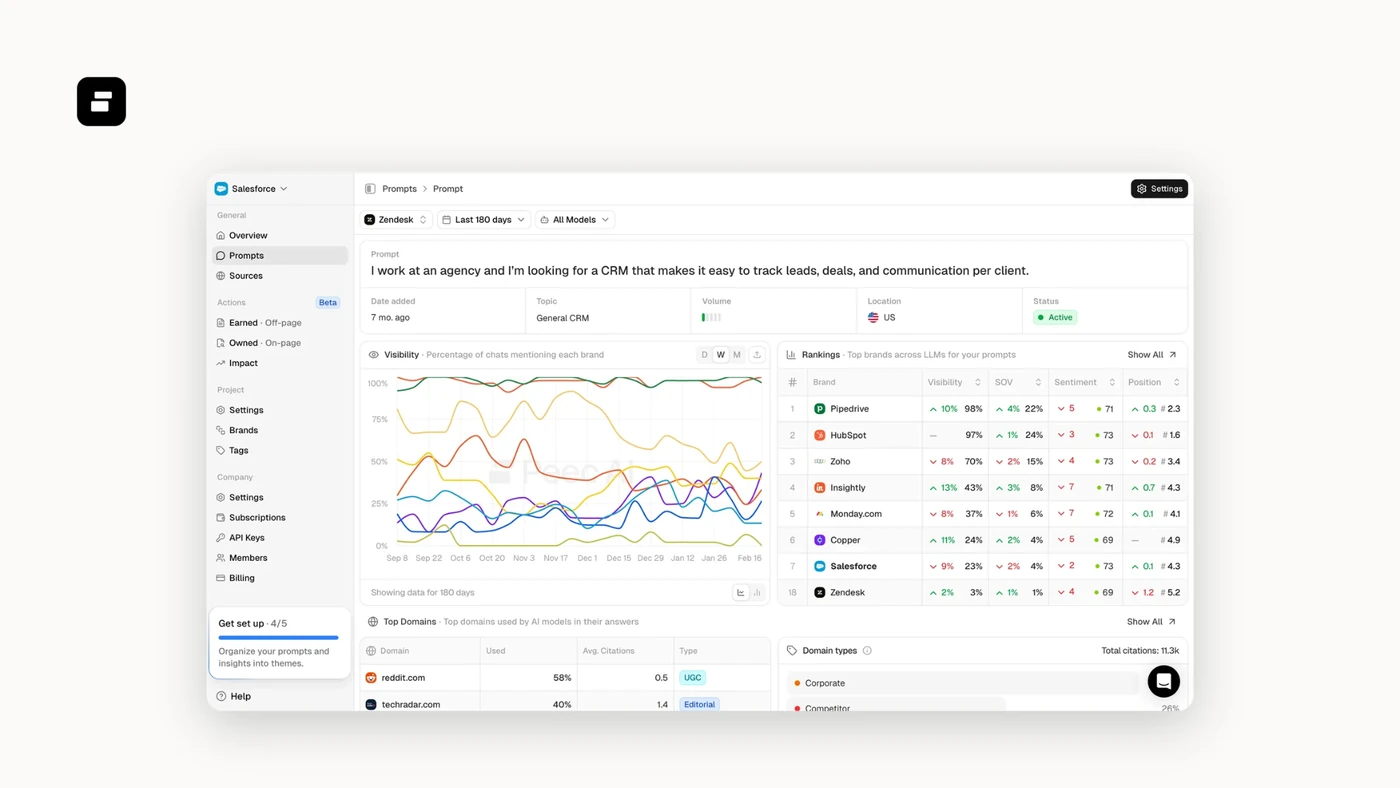
If you have never checked whether ChatGPT names your brand when someone asks your category’s buying question, start here before spending anything on-site. It is the cheapest line item in this article and it answers the question nothing else can.
Who Peec works best for
Brands with enough category presence that being absent from AI answers is a real loss, and teams who will act on the finding by fixing product data and pursuing third-party coverage.
Peec top features
Tracks visibility across ChatGPT, Gemini, Perplexity and Google’s AI Overviews
Scrapes real results rather than calling APIs, which matters because API responses differ from what users actually see
Search volume estimates from clickstream data, so you can weight prompts by how often they’re really asked
Recommends actions rather than only reporting position
MCP connector with granular endpoints, so the data can go into your own tooling
Peec integrations
Peec is platform-agnostic; it watches models, not your store, so there’s no theme or app install.
Peec pricing
From $95/mo for 50 prompts tracked daily across 3 models. Billed on prompts and models rather than store traffic, which makes it the one tool here whose cost doesn’t rise as the brand grows.
7-day free trial, self-serve signup.
Peec pros
Priced flat against traffic, so a growing store doesn’t get punished
Scraped results are closer to shopper reality than API-based tracking
Self-serve with a trial, so you can validate it in a week
Peec cons
Diagnostic only; it will not improve your visibility by itself
50 prompts is tight for a broad catalog, so the real cost is likely above the entry tier
Peec video
Dialog: for catalogs where shoppers don’t know what to ask
Dialog verdict
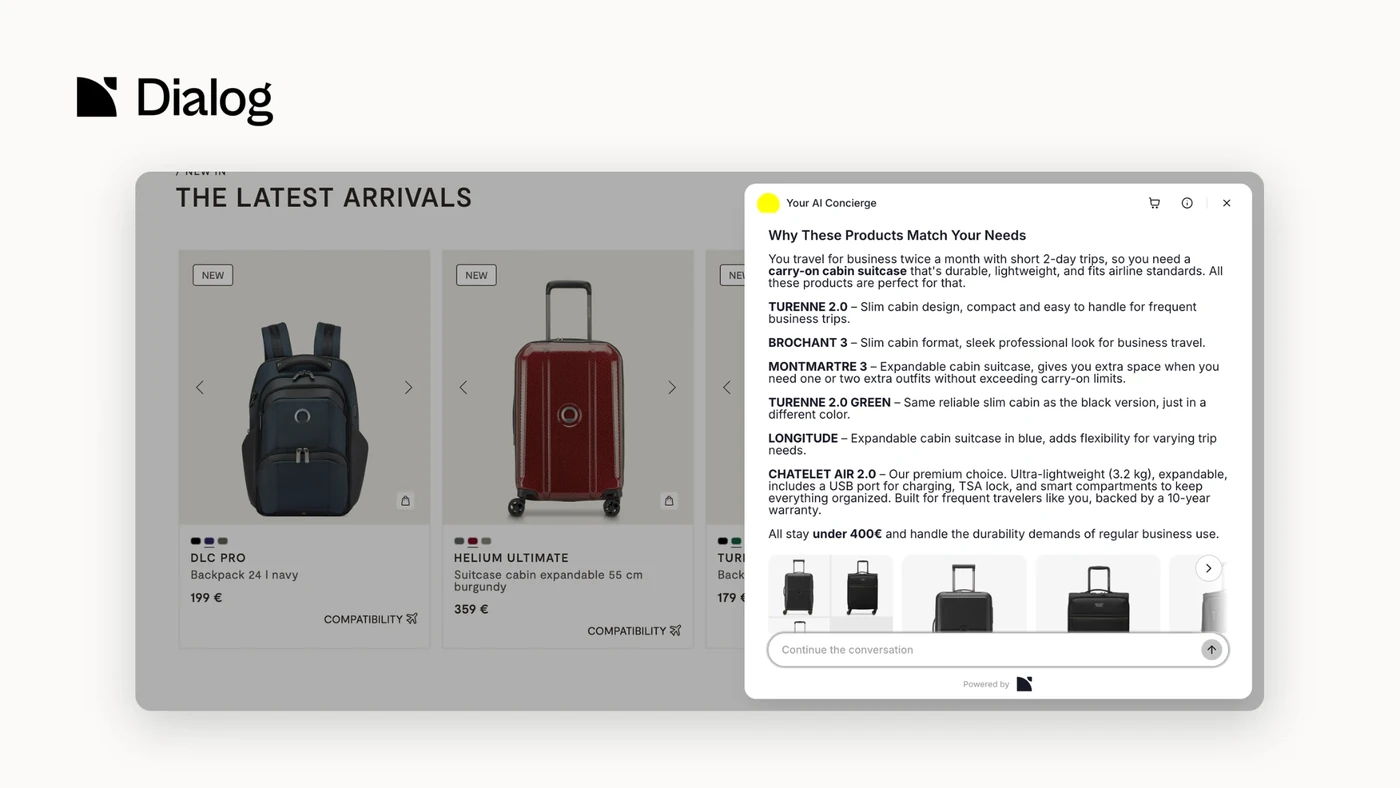
If your bottleneck is diagnosis 4 above, shoppers reaching products and stalling because they can’t tell the options apart, a conversational assistant is the right purchase, and Dialog is a strong pick.
Who Dialog works best for
Mid-market and enterprise brands with 25,000+ monthly visitors on Shopify or 100,000+ elsewhere, selling complex, technical or high-consideration products. The test is whether a customer needs to understand the product before buying it. Luggage, technical apparel, skincare with active ingredients, tools, components: categories where the shopper has a need but not the vocabulary. For a simple catalog of forty t-shirts, this is over-buying.
Dialog top features
Smart Search, which resolves intent rather than matching keywords, so a shopper who describes a problem still lands on the right product
AI PDP Assistant, embedded in the product page to answer technical questions and handle objections where the hesitation actually happens
Personal Shopper, a full conversational experience with multiple entry points and photo upload
Smart Reengagement, which reactivates shoppers based on what they asked and didn’t buy
Analytics and ROI, with native A/B testing and the conversion delta visible in GA4
ChatGPT Apps, which puts the brand’s own agent inside ChatGPT rather than a generic product feed
Dialog integrations
Salesforce Commerce Cloud, Shopify, Scayle, Spryker, SAP and BigCommerce. GA4 for conversion reporting.
Dialog pricing
Free at $0/mo (200 conversations, basic model, 2 training documents).
Starter $249/mo to 25,000 unique visitors
Standard $399/mo to 50,000
Scale $799/mo to 100,000.
A free trial is available.
Dialog pros
Priced on traffic, so the bill is predictable and knowable in advance
Genuine free tier and self-serve trial on Shopify, so evaluation costs nothing
Native A/B testing with the delta visible in GA4
Uses your brand voice and insider knowledge
Dialog cons
Overkill for simple catalogs where shoppers already know what they want
Might be a bit too expensive for the smallest stores
Dialog video
Luigi’s Box: for a search box that doesn’t understand people
Luigi’s Box verdict
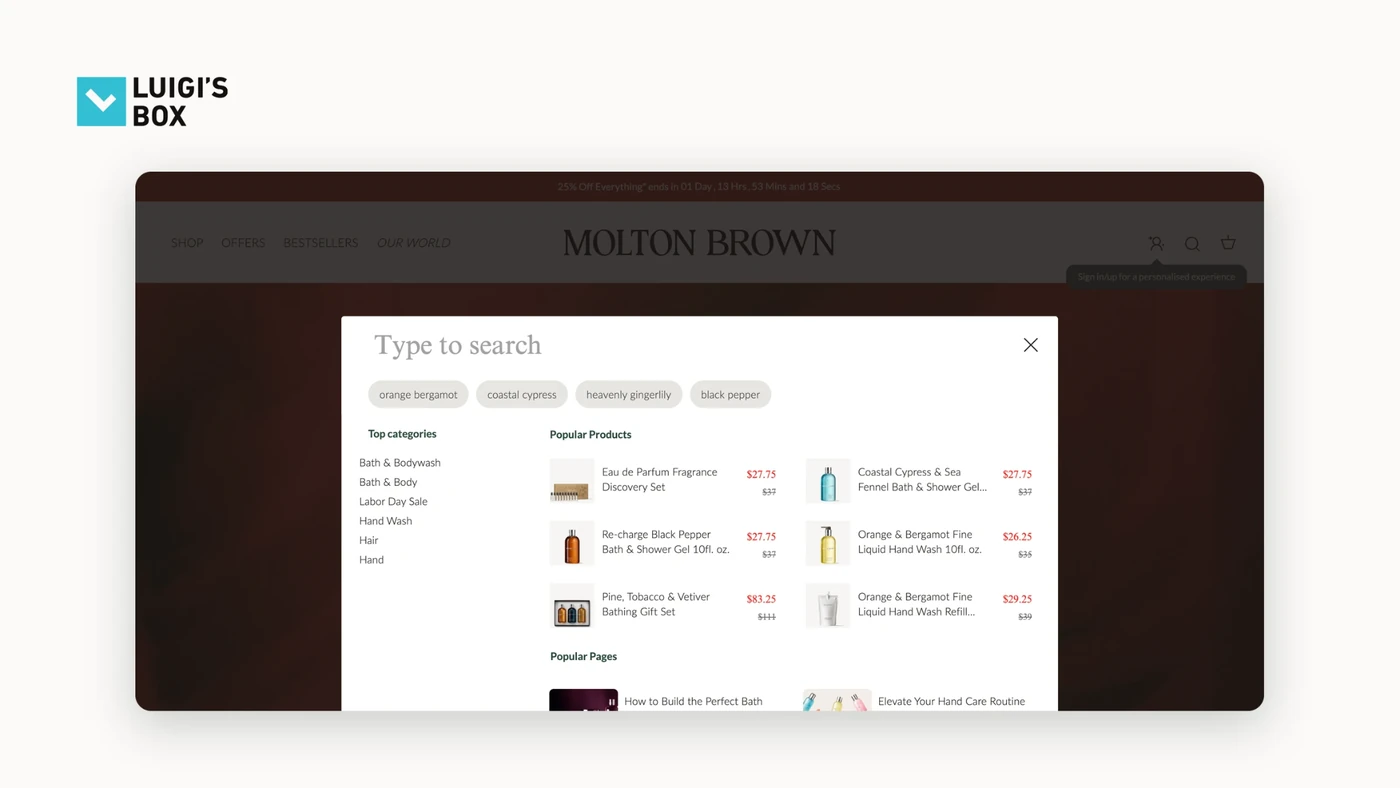
If your zero-result rate or search refinement rate is ugly, this is the most direct fix on the list, and the 425 G2 reviews at 4.8 make it the best-evidenced product here.
Who Luigi’s Box works best for
Stores with large catalogs where search carries real traffic, and teams who want search and discovery without buying a suite. It runs on nine platforms including Shopify, Magento, Shopware, PrestaShop, WooCommerce and BigCommerce, which makes it one of the few genuinely platform-agnostic options. Its ratings split along the same line: 4.8 across 425 G2 reviews against 4.2 across only 10 on Shopify, which suggests the strength sits with larger non-Shopify catalogs.
Luigi’s Box top features
Site search with intent handling, the historical core of the product
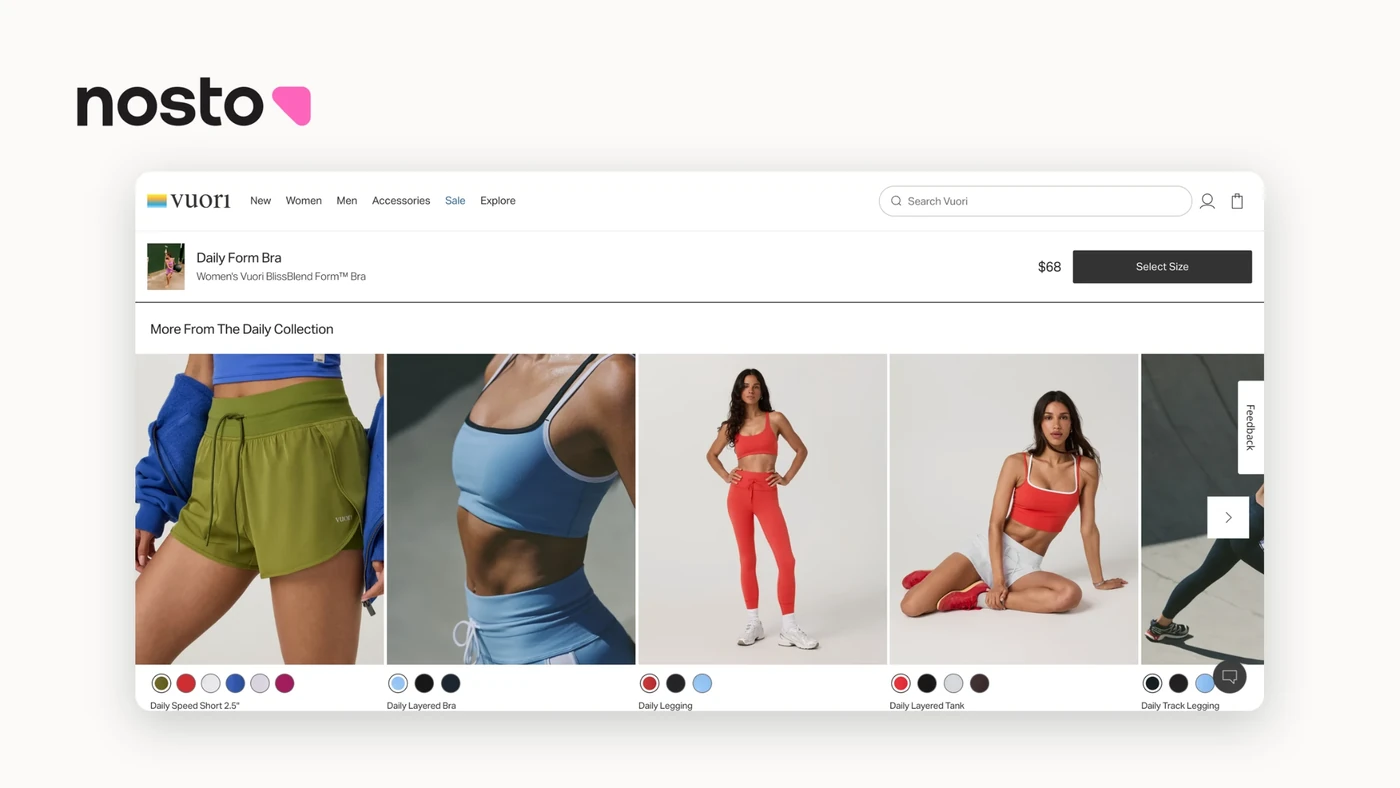
Product recommendations covering frequently bought together, similar products, trends, new arrivals, last-seen and recently-purchased cross-sells
Category page listing and merchandising
Search analytics, which is what actually drives diagnosis 2 above
Luigi’s Box integrations
Shopify, Shoptet, Magento, Shopware, OpenCart, PrestaShop, Squarespace, BigCommerce and WooCommerce.
Luigi’s Box pricing
Not published. You can buy individual products from the suite rather than the whole thing, which helps if you only need search. 30-day free trial and a self-serve path exist, so you can evaluate before talking to anyone, but a real number requires a quote.
Luigi’s Box pros
Narrowly scoped to search and discovery, so no suite lock-in
Nine supported platforms, unusual in a category that mostly means Shopify
Modular, so you can buy search alone
30-day trial is the most generous here
Luigi’s Box cons
No public pricing, so budgeting requires a sales call
Luigi’s Box video
Nosto: for basket size, not for discovery
Nosto verdict
Nosto is a capable full-stack personalization and merchandising platform. But be clear about what you’re buying: recommendations raise items per order and AOV far more reliably than they solve a discovery bottleneck. If diagnosis 5 above described your store, buy it. If diagnosis 2 or 4 did, it will disappoint you.
Who Nosto works best for
Established mid-market and enterprise brands with the budget for an enterprise contract and a merchandising team to run it. Not a fit for a lean team that wants something running this month, since there’s no free trial and no self-serve path.
Nosto top features
Full-stack platform covering search, recommendations, personalization, and merchandising in one contract
Detailed behavioral tracking, which is the engine behind the personalisation
Personalised product discovery across the session rather than per-page rules
Nosto integrations
Shopify, Salesforce Commerce Cloud, Shopware, Adobe Commerce and BigCommerce.
Nosto pricing
Not published. Enterprise contracts are quoted. No free trial and no self-serve signup, so evaluation runs through sales.
Nosto pros
One vendor for search, recommendations, personalization, and merchandising
Strong brand and a solid review base: 235 G2 reviews at 4.6, 60 Shopify at 4.8
Behavioral tracking is genuinely detailed
Nosto cons
Enterprise pricing with no published rates
No free trial and no self-serve, so evaluation requires sales engagement
Nosto video
Octane AI: for small or genuinely novel catalogs
Octane AI verdict
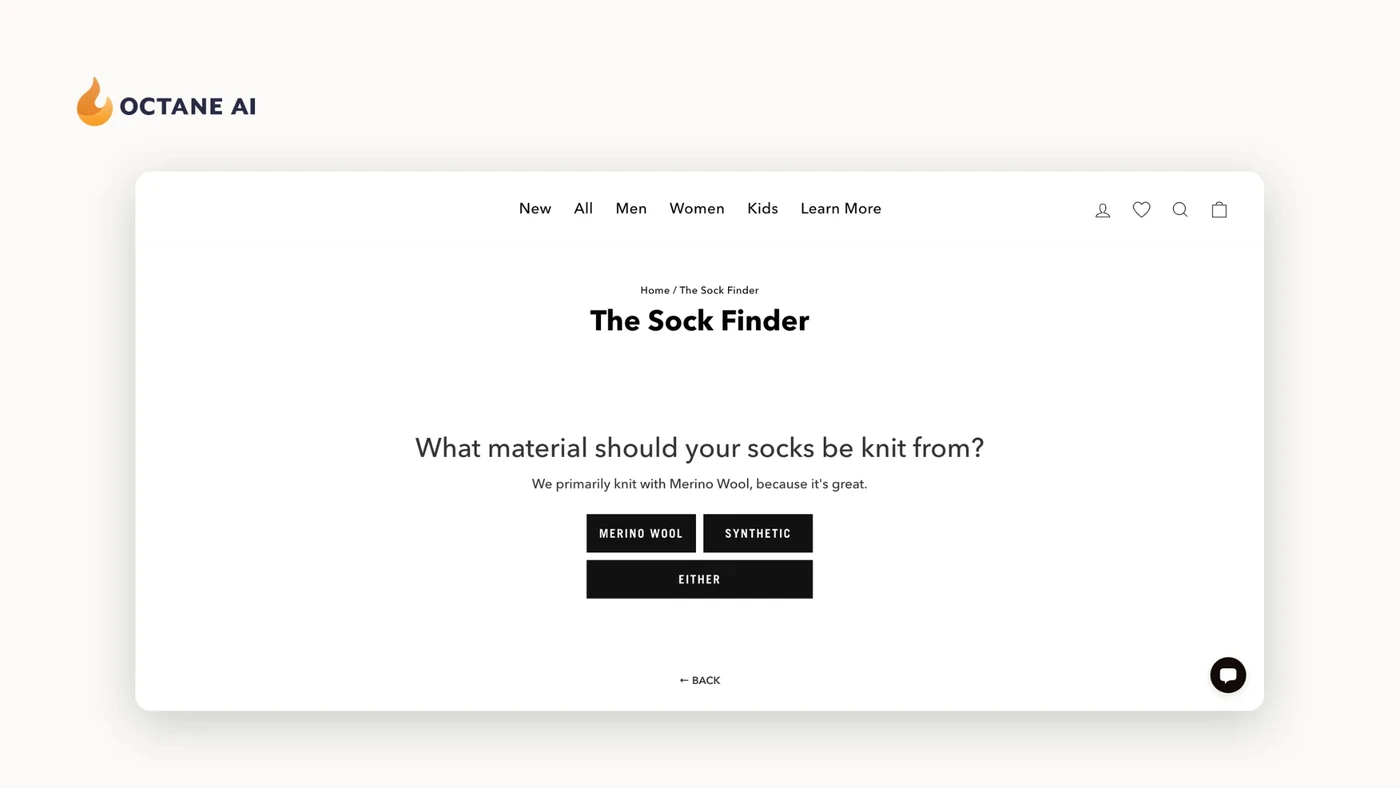
A quiz is the right tool in two specific situations. Buy Octane AI if your inventory is small, or if your product category is novel enough that shoppers have no mental model to search with. Outside those two cases, a conversational assistant wins, and the reason is structural rather than a matter of taste.
Here’s the distinction. A quiz is a fixed decision tree. The questions don’t change, the shopper can’t ask anything back, and the conversation ends at the recommendation. A conversational equivalent adapts its wording, skips questions that no longer apply, and lets the shopper keep talking afterwards. That last part is the difference between a lead-capture form and a salesperson. Where a quiz genuinely wins is a small catalog, where a decision tree can cover the whole space, and a novel category, where the shopper needs to be told what the questions even are.
Who Octane AI works best for
Shopify brands with tight inventories, especially in beauty and supplements, where zero-party data capture feeds an email and SMS programme. Its reference customers, Jones Road Beauty and Dr. Axe, are exactly that shape. If the quiz doubles as your list-building engine, the maths works differently and the price is easier to justify.
Octane AI top features
Native Shopify quiz builder with conditional logic
Zero-party data capture, feeding Klaviyo and SMS flows directly
Native Klaviyo and Attentive integration, which is the real reason many stores buy it
Pop-ups and opt-ins alongside the quiz
A/B testing on the Plus plan and above
AI helpers: Smart Products, Smart Copy and Image Analyzer
Octane AI integrations
Klaviyo, Attentive, Postscript, Recart, Tapcart and Gorgias, among others. Shopify only; there is no path to another platform.
Octane AI pricing
Billed in credits, where 1 credit is one quiz engagement and AI features add on top, so a completion with AI recommendations runs about 1.3 credits.
Basic is $50/mo for 400 credits and a two-quiz limit.
Plus is $200/mo for 2,200 credits, unlimited quizzes and A/B testing.
Enterprise starts at $500/mo for 7,250+ credits.
Octane AI pros
Best review base of any Shopify-native tool here: 182 ratings at 4.9
Klaviyo and Attentive integration is genuinely good and often the deciding factor
Zero-party data has value beyond discovery, which changes the ROI calculation
Cheapest entry point in this comparison at $50/mo
Strong, checkable reference customers
Octane AI cons
A decision tree, not conversational AI, so it can’t handle anything you didn’t anticipate
No question-and-answer after the recommendation; the conversation stops there
The catalog isn’t connected in real time, so updates are manual
Shopify only
Octane AI video
Conclusion
Diagnose before you buy. Zero-result and search refinement rates tell you within a day whether search is the problem. Products viewed per session points at navigation. A soft add-to-cart rate on technical products means shoppers can’t tell your options apart. Flat items per order means it was never discovery at all.
Check the off-site half first, because it’s nearly free. Ask the models your category’s ten buying questions and record who gets named. Peec (from $95/mo) automates it; an afternoon and a spreadsheet does a rough version for nothing.
Fix the product data before buying any layer on top of it. The same catalog quality decides whether a model recommends you and whether your own search works.
Match the tool to the bottleneck. Luigi’s Box for a failing search box. Dialog where shoppers lack the vocabulary to search well. Nosto for basket size. Octane AI only for small or novel catalogs.
Expect opacity on pricing. Three of these five want a sales call before quoting, which shapes how fast you can move.