


TL;DR
Nosto is best for mid-market to enterprise brands that want a proven, all-in-one discovery and personalization suite, because its recommendation library and behavioral personalization are deep, even if pricing sits at the higher end.
Constructor is best for large enterprise retailers with big catalogs and heavy traffic, because its machine-learning ranking optimizes recommendations to revenue and learns from real clickstream behavior.
Dialog is best for mid-market and enterprise brands with complex, high-consideration products, because its generative AI recommends across the catalog through a real conversation, the way an in-store advisor would.
Introduction
Ask any online shopper about their last frustrating purchase, and you will hear the same story: too many products, not enough guidance.
Physical retail solved this decades ago with a salesperson who knew the catalog. Online, that job falls to a product recommendation engine.
For years, the recommendation engine looked the same everywhere. An algorithm watched what shoppers clicked and bought, then filled a widget with "customers also viewed" or "frequently bought together." That approach still works, and it still drives real revenue.
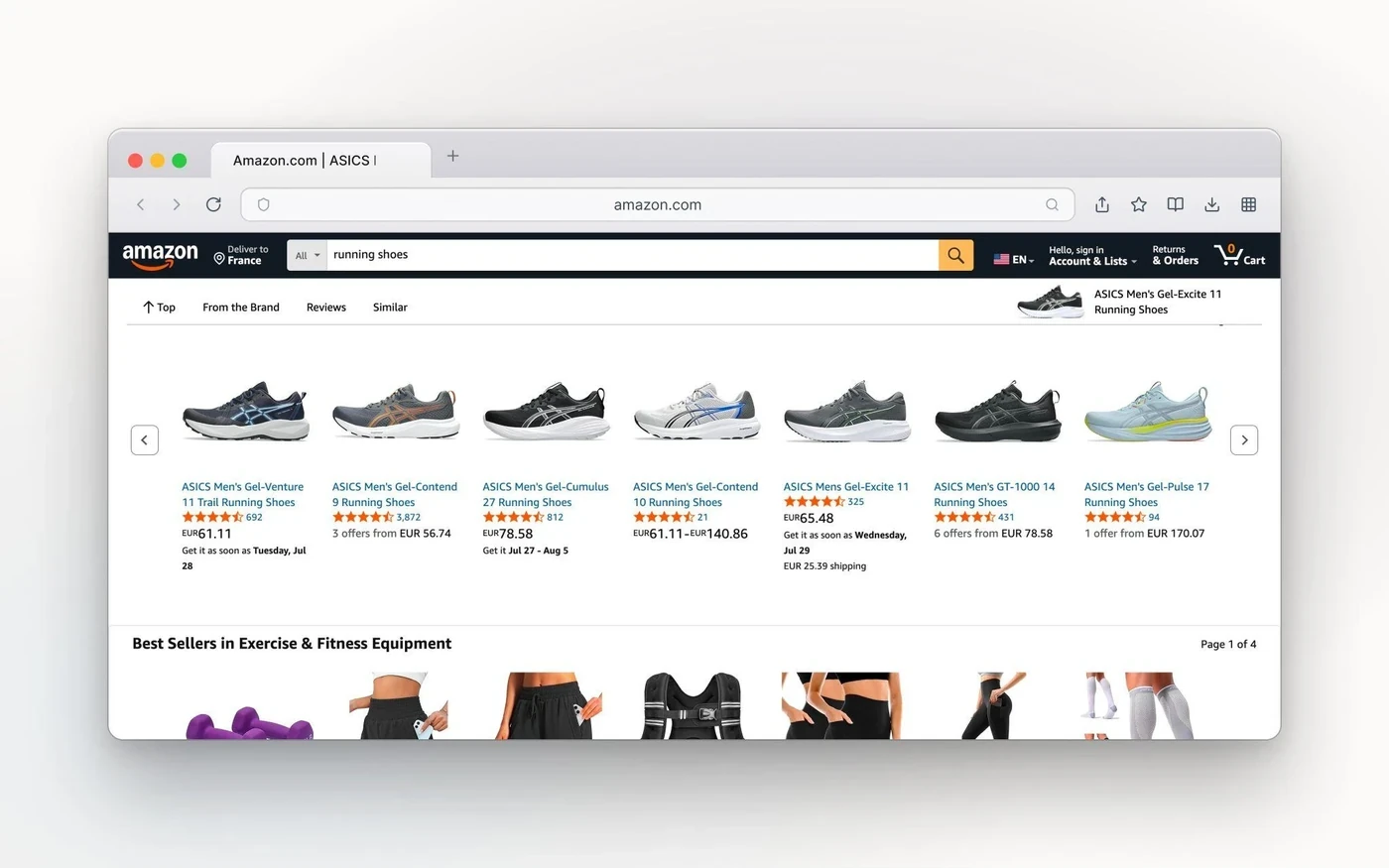
Traditional product recommendations on Amazon.com
Then generative AI changed the shape of the category. A new kind of product recommendation system arrived, one that recommends through discussion, as if the shopper were talking to a sales rep. Instead of a static grid, the customer describes what they need and the engine reasons across the catalog to answer.
This guide compares eight product recommendation engines across both camps. We look at three things ecommerce owners actually care about:
Which recommendation strategies each tool supports.
Whether it runs on its own, or needs to plug into your customer engagement stack and CDP.
Whether it is affordable or built for enterprise budgets.
Here is the shortlist at a glance, then a short primer on how recommendation technology works before we get into each tool.
The 8 product recommendation engines at a glance
Solution | Founding date | Recommendation type | G2 score | Starting price |
|---|---|---|---|---|
Bloomreach | 2009 | Traditional | 4.6/5 | No public pricing |
Constructor | 2015 | Traditional | 4.8/5 | No public pricing |
Dialog | 2022 | genAI based | 5/5 | $249/mo |
Dynamic Yield | 2011 | Traditional | 4.5/5 | No public pricing |
Insider | 2012 | Traditional | 4.8/5 | No public pricing |
Luigi's Box | 2014 | Traditional | 4.8/5 | No public pricing |
Nosto | 2011 | Traditional | 4.6/5 | No public pricing |
Rep AI | 2021 | genAI based | 4.9/5 | $12/mo |
What is a product recommendation engine?
Definition
A product recommendation engine is software that analyzes shopper behavior and catalog data, then suggests the products a given visitor is most likely to want. It turns a large, undifferentiated catalog into a short, relevant list for each person.
The output shows up in familiar places. It can be a widget on a product page ("you may also like"), a block on the homepage, a slot inside search results, an email module, or, more recently, a message inside a conversation. The goal is always the same: reduce the effort a shopper spends finding the right product, and lift conversion and average order value in the process.
Under the hood, a recommendation engine relies on three inputs: the catalog (what you sell, with attributes and stock), behavioral data (what shoppers view, add to cart, and buy), and a ranking logic that decides which products to show in which slot. The quality of a product recommendation engine comes down to how well it combines those three.
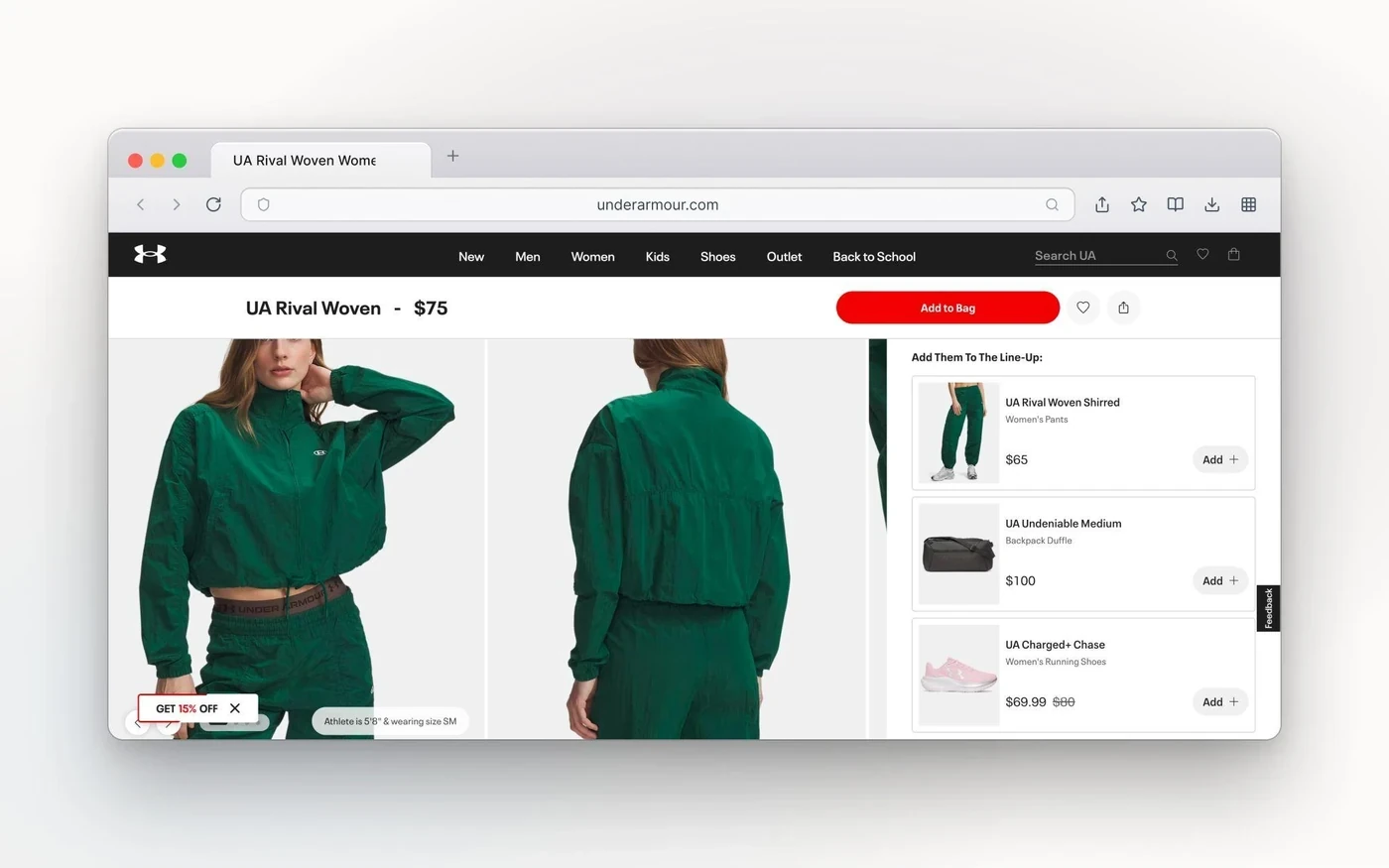
Complementary product recommendations on Under Armour's Store
Evolution
The first generation of product recommendation technology was rules-based. A merchant manually linked products together, for example pairing a camera with its memory card. It worked, but it did not scale past a small catalog.
The second generation, still dominant today, is algorithmic. Collaborative filtering ("people who viewed this also viewed that") and behavioral models learn associations automatically from clickstream data. Most of the tools in this guide sit here. They are mature, reliable, and measurable.
The third generation is generative AI. Instead of matching patterns across past behavior, a large language model reasons over the catalog in real time and recommends through natural language. The shopper does not scan a grid; they describe a need and get an answer. This is the emerging category, and it is where two of our eight tools, Rep AI and Dialog, now compete.
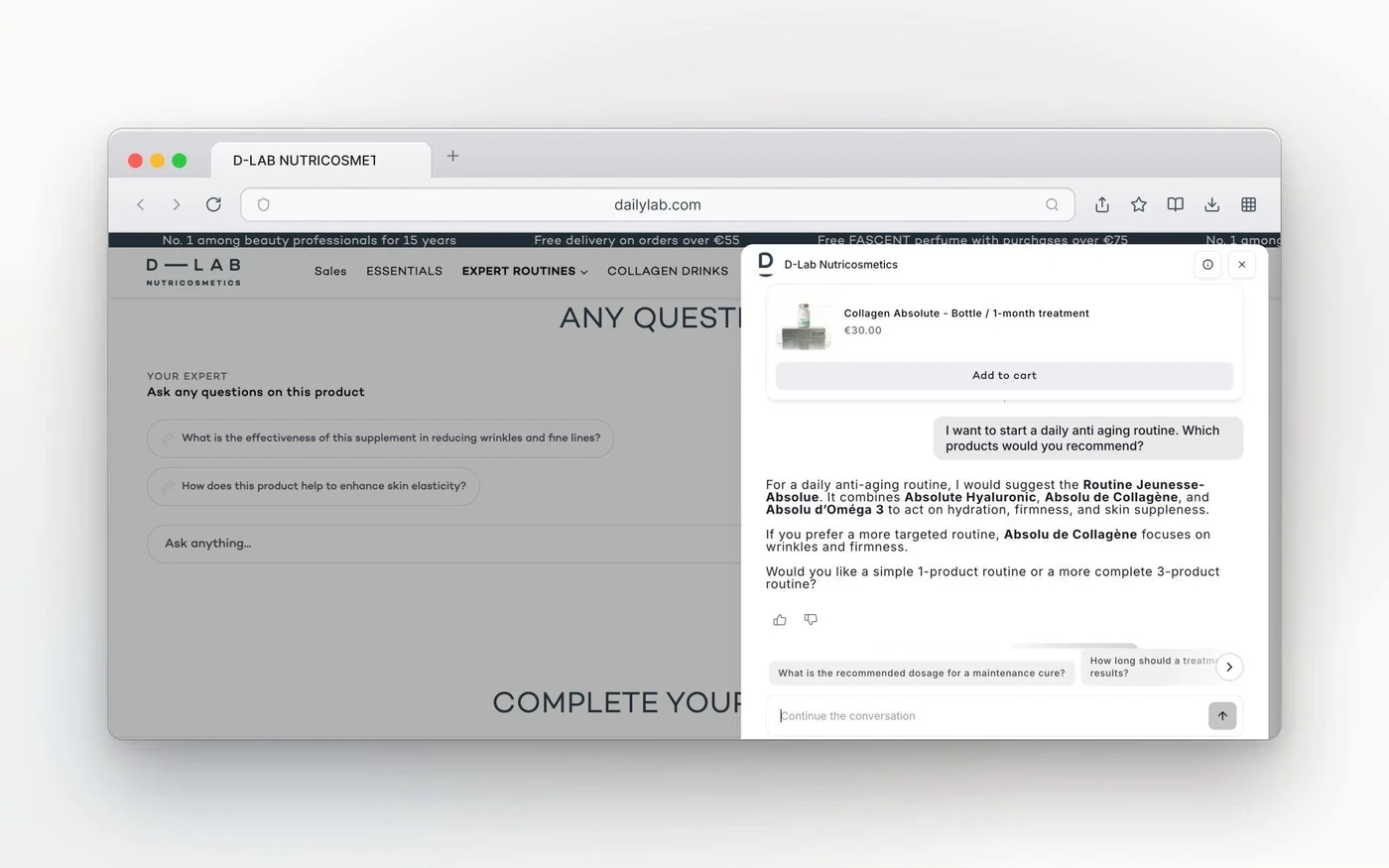
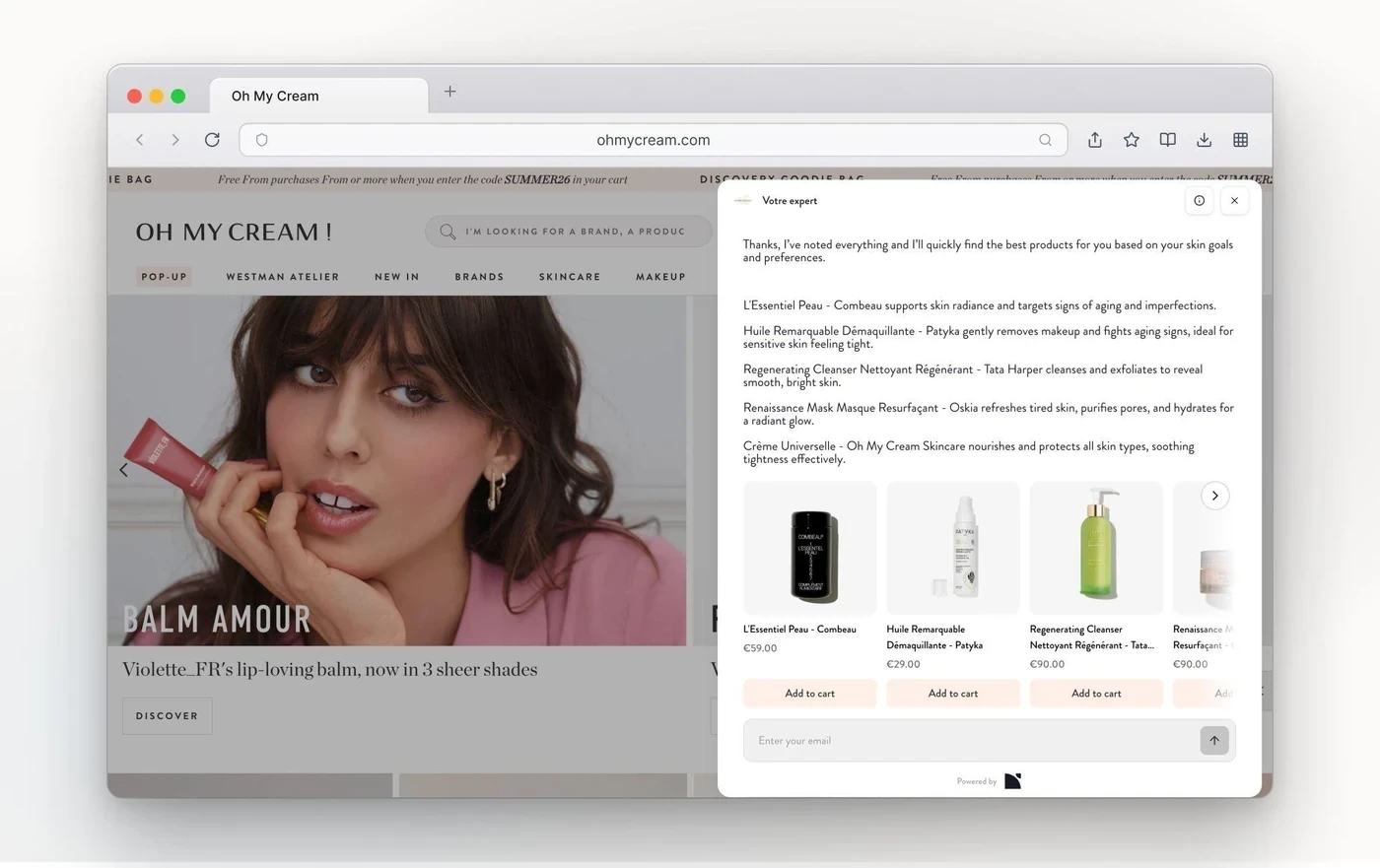
Product recommendations shared by a GenAI engine on Daily Lab
These generations do not cancel each other out. Many brands run a traditional engine for their product pages and a conversational layer for guided selling. The right question is not "old or new," but "which strategies do I need, and how do they reach my shopper."
Most frequent strategies
Traditional engines share a common vocabulary of strategies. The most frequent ones:
Frequently bought together. Products commonly purchased in the same order, ideal for cross-sell (a razor and its blades).
Customers who viewed this also viewed. Collaborative filtering based on browsing overlap, useful for discovery.
Similar or related products. Items that share attributes with the one being viewed, good for offering alternatives.
Best sellers and trending. Popularity-based recommendations, often geo-targeted, that reduce risk for undecided shoppers.
Recently viewed and last seen. A memory aid that helps shoppers return to products they considered.
Cart-based and post-purchase. Suggestions triggered by what is in the basket, or shown right after checkout as an upsell.
Generative AI adds a different strategy, best described as conversational product discovery. The shopper states an intent ("a dry red under 30 euros for a fish dinner," "a routine for combination skin with redness"), and the engine recommends the right products from a dialogue, asking clarifying questions along the way. It is less a strategy slot than a new interface for the whole recommendation problem.
With the concepts clear, here is how we tested the eight tools.
How we selected our recommendations
To avoid being partial, we did two things for every product.
First, we tested the products hands-on whenever a free trial was available, and reviewed every product tour and demo when a trial was not offered. That let us see how each recommendation engine behaves in a real store, not just in marketing copy.
Second, we read at least 50 G2 reviews for each product to get an honest sense of real strengths and weaknesses. We complemented that with Trustpilot and Shopify App Store reviews when they were available, and we flag below when a source was missing so you know where our read is thinner.
Nosto — Best for mid-market to enterprise brands wanting an all-in-one discovery suite
What is Nosto?
Nosto is a commerce experience platform founded in 2011, well known among Shopify and Salesforce Commerce Cloud brands. It bundles site search, product recommendations, personalization, merchandising, and business intelligence into one suite. Its recommendation module is one of the most mature on the market.
Why Nosto is a good product recommendation engine
A broad strategy library. Nosto supports best sellers, browsed items, related-to-browsed, frequently bought together, "people who viewed this also viewed," geo-targeted trending products, and a real-time live feed of what other shoppers are adding to cart and buying. That covers nearly every slot a merchant needs.
Behavioral personalization. Recommendations adapt to each shopper's profile, built from their browsing and purchase history, so two visitors on the same page can see different products.
Built-in A/B testing. You can test recommendation strategies against each other and let data pick the winner, a point reviewers raise often.
Post-purchase upsell on Shopify. Nosto can show AI-tailored offers immediately after checkout, capturing extra order value at a high-intent moment.
Merchandising control. Merchants keep full control over rankings across every discovery surface, blending automated recommendations with manual rules.
What reviewers say about Nosto
Based on our analysis of G2 and Shopify reviews (Nosto holds 4.6/5 on G2 and 4.8/5 across roughly 60 Shopify reviews), here is the pattern.
Main pros:
Outstanding customer support and dedicated account managers, the single most cited strength.
Intuitive, easy to use even for non-technical marketers.
A powerful all-in-one feature set that many teams grow into.
Robust A/B testing that reviewers use to tune recommendations.
Main cons:
Expensive, with several reviewers noting price increases at renewal.
Occasional bugs in merchandising and display, with slow updates.
Analytics and reporting described as thinner than the rest of the platform.
One caveat worth noting: Nosto does not yet offer a conversational AI shopping agent, though its recent acquisition of Zoovu's XGEN AI assets suggests that may change.
Demo video of Nosto
Dynamic Yield — Best for enterprise teams wanting algorithmic personalization across web and email

What is Dynamic Yield?
Dynamic Yield is a personalization engine founded in 2011, acquired by McDonald's in 2019 and sold to Mastercard in 2022. It serves large enterprise clients like Sephora and Lacoste, and it spans recommendations, email personalization, search, and A/B testing.
Why Dynamic Yield is a good product recommendation engine
A full set of algorithmic strategies. It recommends popular products, recently viewed items, keyword-similar products, geo-targeted picks, and products based on affinity with other buyers.
Recommendations that extend to email. The same engine powers cart-abandonment and follow-up emails, keeping product suggestions consistent across web and inbox.
Visual search. Shoppers can upload a photo to find similar products, a useful complement to text-based discovery.
Strong experimentation. A/B testing is a standout, letting teams pit recommendation strategies against each other before rolling out.
What reviewers say about Dynamic Yield
Based on our analysis of G2 reviews (4.5/5), and noting that its Shopify presence is very limited (only about 2 Shopify reviews, so we treat that source as inconclusive), here is what stands out.
Main pros:
Exceptional customer success and technical account management, by far the most cited strength.
An intuitive interface for day-to-day campaign work.
Powerful personalization and recommendation capabilities.
Rich out-of-the-box templates that speed up launch.
Main cons:
Reporting and analytics limitations, including weak export and no custom date ranges.
A learning curve at onboarding, made harder by frequent platform changes.
Deep customization often needs developer support.
Note that Dynamic Yield has not added generative AI features, and its product has evolved slowly since the Mastercard acquisition.
Demo video of Dynamic Yield
Bloomreach — Best for enterprise brands wanting recommendations inside a full personalization suite

What is Bloomreach?
Bloomreach, founded in 2009, is an AI-powered personalization platform built around four pillars:
Engagement (marketing automation with CDP capabilities),
Discovery (search and merchandising),
Content (a headless CMS),
and Clarity (a conversational shopping assistant).
Its recommendation widgets live inside Discovery and Content, powered by its AI layer, Loomi.
Why Bloomreach is a good product recommendation engine
Recommendations on unified data. Because recommendations run on the same customer data as email, web personalization, and segmentation, suggestions stay consistent across every channel.
Deep configurability. Reviewers describe the platform as extremely flexible, able to adapt to almost any use case, which extends to how recommendations are built and placed.
Merchandising and content control. Product grids and recommendation widgets are managed inside the same CMS your team already uses for pages.
A conversational layer. Clarity adds a GenAI shopping assistant on top, so a brand can pair traditional recommendation widgets with a conversational surface.
What reviewers say about Bloomreach
Based on our analysis of G2 reviews (4.6/5) and Shopify reviews (a low 2.7/5 across only 6 ratings, which we flag as a weak signal on a small sample), here is the picture.
Main pros:
An all-in-one unified platform, the most cited strength, with customer data and personalization in one place.
An intuitive UI once teams are ramped up.
Powerful and highly customizable.
Excellent support and onboarding.
Main cons:
A steep learning curve; not beginner-friendly, and often needs technical skills.
Reporting and analytics described as shallow.
Documentation and training that need work.
Demo video of Bloomreach
Insider — Best for enterprise brands tying recommendations to a CDP and omnichannel campaigns

What is Insider?
Insider (Insider One) is a customer engagement platform founded in 2012, used by enterprise brands like Samsung and Estée Lauder. It collects behavior across web, app, email, and messaging into a single customer profile, then triggers personalized campaigns and product recommendation widgets from that data.
Why Insider is a good product recommendation engine
A very large strategy set. Insider supports 20-plus recommendation strategies, including bought-together, user-based, and most-valuable-products.
Per-slot auto-optimization. It combines product attributes with user affinity to choose the best product to show in each individual slot, rather than applying one rule everywhere.
Recommendations fed by a CDP. Because suggestions draw on a unified profile spanning web, app, email, and WhatsApp, they reflect the full customer relationship, not just the current session.
Omnichannel delivery. The same recommendations can reach shoppers through email, push, SMS, WhatsApp, and on-site widgets.
What reviewers say about Insider
Based on our analysis of G2 reviews (4.8/5 across a very large 1,395 reviews) and Shopify reviews (4.6/5 across roughly 20 ratings), the pattern is consistent.
Main pros:
Easy to use, with an intuitive interface, the most cited strength on such a wide platform.
Responsive support and dedicated customer-success teams.
A flexible journey builder that reduces engineering dependency.
Strong omnichannel reach and segmentation.
Main cons:
A steep learning curve and long onboarding for a feature-heavy platform.
Some module and feature gaps (for example, company-level segmentation).
Pricing described as expensive and not flexible enough.
Insider announced Agent One, its conversational agent, in May 2026, which adds a shopping agent on top of the traditional engine.
Demo video of Insider
Constructor — Best for large enterprise retailers optimizing discovery to revenue

What is Constructor?
Constructor, founded in 2015, is an AI-powered search and product discovery platform built for enterprise ecommerce. It counts Gap, Sephora, and Foot Locker among its customers, and its recommendations product sits alongside search, browse, and collections.
Why Constructor is a good product recommendation engine
A complete recommendation set. It suggests complementary products, alternatives, bundles, best sellers, recently viewed, cart items, and query-based recommendations.
Ranking that learns from behavior. Constructor's machine learning continuously improves product ranking based on real user behavior, and it can optimize to a business KPI such as revenue per visitor.
Merchandising without developers. Real-time controls let business users highlight products and campaigns without engineering support.
Recommendations beyond the site. The same engine feeds email, ads, SMS, and push, extending recommendations across channels.
What reviewers say about Constructor
Based on our analysis of G2 reviews (4.8/5), and noting that we did not have Shopify reviews to draw on (Constructor's Shopify listing shows no ratings), here is what reviewers emphasize.
Main pros:
AI and machine learning that genuinely learns from user behavior, the most cited strength.
Easy to use, even for non-technical business users.
Measurable revenue and conversion lift, with product recommendations singled out.
Powerful merchandising control and configurability.
Main cons:
Analytics and data export that could be more robust.
Catalog and data-feed management that can be fiddly.
Sync and catalog-processing delays, so changes are not always instant.
Demo video of Constructor
Luigi's Box — Best for mid-market brands wanting affordable, self-serve search and recommendations
What is Luigi's Box?
Luigi's Box, founded in 2014, is a narrowly scoped search and product discovery platform. It does search, recommendations, category listing, and analytics, without the marketing automation or CDP layers of the larger suites. Think of it as a direct alternative to Algolia or Bloomreach Discovery, and it is notably self-serve.
Why Luigi's Box is a good product recommendation engine
A solid strategy library. Its Recommender supports frequently bought together, similar products, trends (bestsellers), new arrivals and discounts, last-seen products, recently-purchased cross-sell, top categories, and best items in a category.
Search-first relevance. Because the platform grew from site search, its understanding of intent, typos, and synonyms carries into how it surfaces recommended products.
Modular and self-serve. You can buy only the recommender rather than a whole suite, and a 30-day free trial lets you test before committing, which lowers the barrier for smaller teams.
What reviewers say about Luigi's Box
Based on our analysis of G2 reviews (4.8/5) and Shopify reviews (4.2/5 across roughly 10 ratings), the feedback is focused.
Main pros:
Accurate, relevant search and discovery that handles typos, synonyms, and user intent, by far the most cited strength.
Main cons:
A learning curve, with initial setup and tuning taking time, and requests for better onboarding documentation.
The review base is smaller and more search-centric than the big suites, so we weight it as directional rather than definitive.
Demo video of Luigi's Box
Dialog — Best for mid-market and enterprise brands with complex, high-consideration products
What is Dialog?
Dialog, founded in 2022, is our own product, so we have taken as many precautions as possible to describe it accurately and to lean on the same review sources we used for every other tool.
It is the first of our two generative AI engines.
Dialog encodes a brand's catalog, identity, and sales expertise into a generative AI agent deployed wherever purchase decisions happen, on-site and inside ChatGPT.
Why Dialog is a good product recommendation engine
Conversational recommendations across the catalog. The Personal Shopper understands a customer's need and recommends the right products from the first message, adapting its questions rather than following a rigid quiz. It can also take a photo as input (for example, a room to furnish or skin to diagnose).
Recommendations grounded in deep product intelligence. Dialog connects to the full catalog, real-time stock, SEO articles, and uploaded PDFs (including in-store training manuals), so its suggestions reason over what the brand actually knows, not just the current conversation.
On-page alternatives. The PDP Assistant can recommend an alternative product when the one a shopper is viewing does not fit their need, without the shopper leaving the page.
Autonomous, no suite required. Dialog runs on its own and connects to your CRM or CDP (Klaviyo, Brevo, HubSpot, and others) for reengagement, rather than requiring you to buy a full platform.
Analytics that close the loop. A Missing Info dashboard shows, product by product, which questions the AI could not answer, and native A/B testing surfaces the conversion delta in GA4.
What reviewers say about Dialog
Based on our analysis of G2 reviews (5/5 across 10 reviews) and Shopify reviews (5.0/5 across 32 ratings), here is what reviewers highlight.
Main pros:
A standalone product, so you do not have to buy a whole suite to get it.
A 360-degree view of the store, ingesting catalog, internal docs, and SEO articles to help buyers.
Detailed analytics that reveal the exact questions buyers ask, including gaps to cover in your content.
Main cons:
Not a full suite, which is a drawback if you want to centralize everything in one platform.
A newer product compared with legacy solutions.
Demo video of Dialog
Rep AI — Best for Shopify mid-market brands wanting a proactive genAI sales concierge

What is Rep AI?
Rep AI, founded in 2021, is a conversational AI platform for ecommerce that positions itself as an "agentic commerce operating system." It combines sales, support, and analytics, and it sits as an AI layer on top of a store, engaging shoppers through chat, email, and social channels.
Why Rep AI is a good product recommendation engine
Proactive, behavior-triggered conversations. Its AI monitors shopper actions (product comparisons, repeat browsing, exit signals) and starts a contextual conversation when it detects hesitation or intent.
Recommendations inside the chat. During that conversation, Rep AI handles product discovery, recommendations, upsells, and cross-sells, then can add suggested products to the cart.
Multi-channel reach. The same agent operates across on-site chat, email, Instagram and Facebook DMs, and WhatsApp, with interactions connected across channels.
Affordable entry and self-serve. Pricing starts at $12/month for 3,000 sessions on the sales agent, with a 30-day trial, which is unusually accessible for an AI agent.
What reviewers say about Rep AI
Based on our analysis of G2 reviews (4.9/5) and Shopify reviews (4.7/5 across roughly 111 ratings), here is the pattern.
Main pros:
Excellent support and dedicated account managers, the most cited strength.
Measurable lift in sales, conversion rate, AOV, and ROI.
Fewer support tickets thanks to 24/7 answers.
Smart product recommendations, upsell, and cross-sell inside the chat.
Main cons:
AI responses that need fine-tuning and are occasionally inaccurate.
Pricing on the higher side as volume grows, and session-based billing that can spike during flash sales.
A technical backend where building flows takes effort and setup time.
One structural point for buyers: Rep AI's recommendations are generated mainly from the conversation itself, rather than from deep, catalog-wide product intelligence, which matters most for technical or high-consideration catalogs.
Demo video of Rep AI
Conclusion
Choosing a product recommendation engine comes down to matching strategy, integration, and budget to your store. Here is how the eight sort out.
If you want recommendations inside a broader personalization and CDP platform, look at Bloomreach, Insider, or Dynamic Yield. They are powerful and data-rich, but they are enterprise-priced and carry a learning curve.
If you want a discovery-focused engine that runs on its own, Constructor suits large, high-traffic retailers optimizing to revenue, Nosto suits mid-market to enterprise brands wanting a deep all-in-one suite, and Luigi's Box suits smaller teams wanting an affordable, self-serve option.
If you want the new generative AI approach, Rep AI is an accessible, proactive concierge that recommends inside the chat. Dialog is built for complex, high-consideration catalogs, because it recommends through conversation while reasoning over your full catalog and documentation.
On budget specifically: Rep AI, Luigi's Box, and Dialog offer self-serve entry points and trials, while Bloomreach, Insider, Dynamic Yield, Constructor, and Nosto are quote-based and generally sit at enterprise price levels.
The honest summary: traditional engines remain the reliable default for product-page recommendations, and generative AI is the fast-emerging layer for guided, conversational selling. Many brands will end up running both.