


TL;DR
Typeform is best for beginners and content teams because it is quick to build, cheap to start, and familiar, though its static decision tree never learns your catalog.
Dialog is best for mid-market and premium brands with complex products because its AI runs a real conversation, reads your live catalog, and keeps talking after the recommendation.
Octane AI is best for established Shopify beauty and wellness brands because it pairs a mature quiz builder with native Klaviyo and SMS capture, if you can live with a dated interface.
Recomma is best for small Shopify stores on a tight budget because it delivers a clean drag-and-drop quiz and standout support from around $15 per month.
Constructor is best for enterprise retailers because its quiz sits inside a full AI search and discovery suite, priced accordingly.
Introduction
Imagine a sales rep who never sleeps.
One who greets every visitor, asks the right questions, and hands each shopper the product that actually fits.
That is the promise of a Shopify quiz builder. It recreates the in-store associate online, at scale, for every visitor at once.
The results can be striking. Function of Beauty runs a product quiz that reaches an 80% completion rate and supports 80% of their business, which works out to more than one million quiz engagements per year.
The catch is that "Shopify quiz builder" now covers two very different kinds of tools. Some are manual form builders. Others are AI agents that generate their own questions and read your catalog in real time.
This guide clears that up. We explain what a Shopify quiz builder actually is, share the best practices that make quizzes convert, and compare our five favorite quiz apps for Shopify stores.
What is a Shopify quiz builder?
Quick definition
A Shopify quiz builder is an app that lets you create an interactive product quiz for your store.
The shopper answers a few questions, and the quiz returns a personalized product recommendation.
The goal is guided selling. Instead of forcing a visitor to navigate categories and filters, you ask about their needs and point them to the right product. Along the way, most quiz builders also capture an email or phone number, which turns anonymous traffic into zero-party data you can market to later.
Quizzes work best for stores where choice is hard. Think skincare, supplements, fragrance, gifting, or any catalog where the shopper needs advice before they buy.
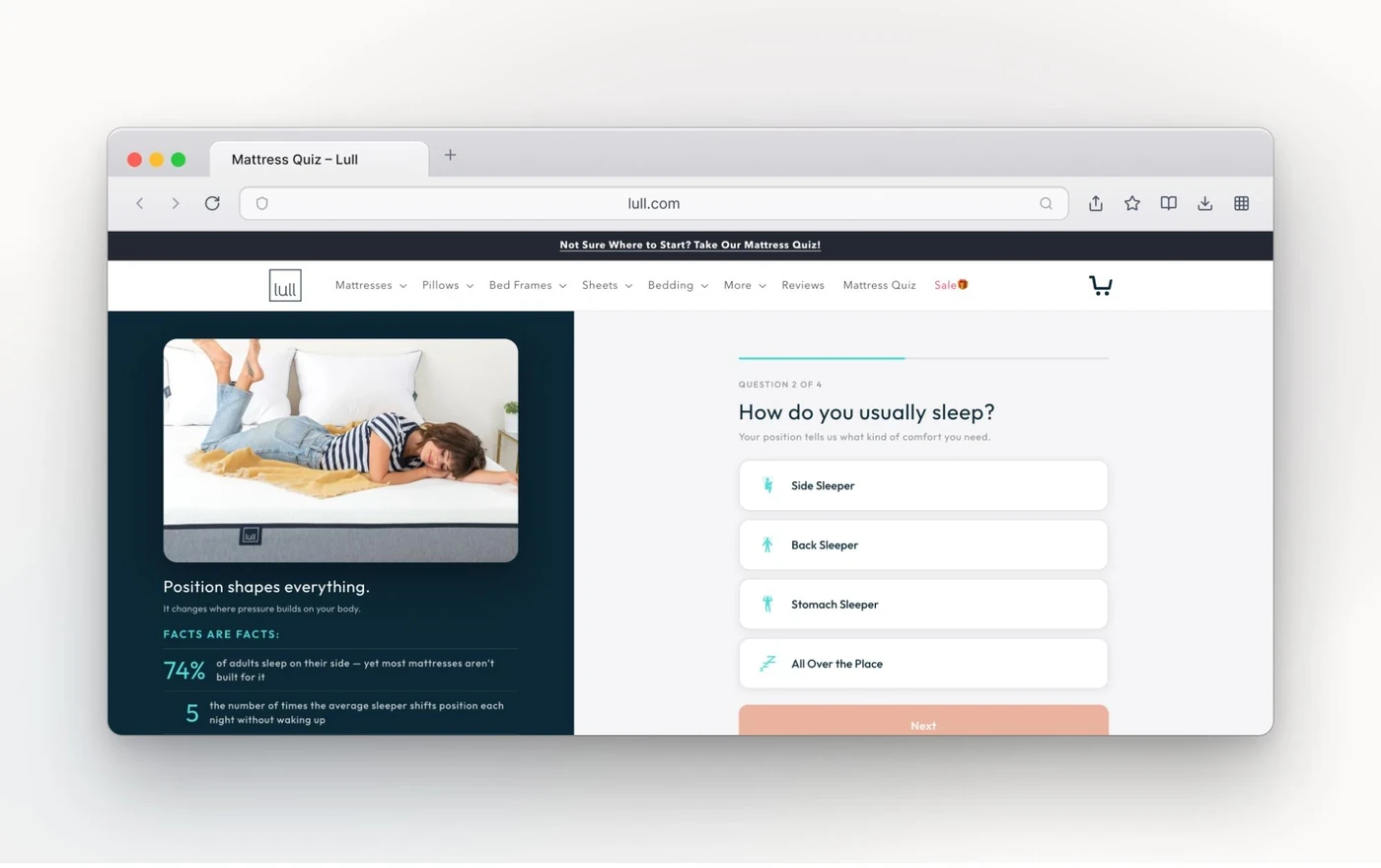
A quiz on Shopify-powered lull.com helping buyers find the ideal mattress.
The different types of builders
Not all quiz builders are built the same way. There are two broad families, and the gap between them is widening.
Manual quiz builders. This is the traditional approach. You build the quiz by hand in a WYSIWYG editor, writing every question, every answer, and every branch of the logic yourself. You then map each outcome to specific products. Typeform, Recomma, and Octane AI's core builder all work this way. The upside is control. The downside is maintenance, because the quiz does not know your catalog, and every product change means updating the logic by hand.
AI quiz builders. A newer generation uses generative AI to run the quiz for you. You give the tool a goal, and it generates its own questions, adapts them to each answer, and recommends products by reading your live catalog. Some, like Dialog, hold a genuine conversation and let the shopper keep asking questions after the recommendation. This removes most of the manual setup and keeps the quiz in sync with your inventory automatically.
The rest of this guide covers both types, because the right choice depends on your budget, your catalog, and how much you want to maintain.
How we selected our recommendations
To stay neutral, so we lean on testing and reviews rather than opinion:
We test each product whenever a free trial is available, and we work through every product tour and demo when it is not.
We read the available third-party reviews for each tool across G2, Shopify, and Trustpilot to get a real sense of strengths and weaknesses. Review counts vary a lot here. Typeform has more than 1,000 G2 reviews, while newer or enterprise tools have far fewer, so we weight accordingly and say when a source is thin.
One disclosure. Dialog is our own product. We have worked to present it with the same scrutiny we applied to every other tool, and we flag its limitations alongside its strengths.
The best Shopify quiz builders
Here is how the five compare at a glance.
Tool | Best for | AI quiz? | Pricing (from) | Free trial | Shopify rating |
|---|---|---|---|---|---|
Typeform | Beginners, content teams | No (static logic) | Free, paid from $29/mo | Free plan only | No Shopify app |
Dialog | Mid-market & premium, complex catalogs | Yes (conversational) | Free, paid from $249/mo | Yes | 5.0 (32) |
Recomma | Small stores on a budget | No | Free, paid from $15/mo | 14 days | 4.9 (84) |
Octane AI | Beauty & wellness brands | Partial (AI add-ons) | From $50/mo | 14 days | 4.9 (182) |
Constructor | Enterprise retailers | Yes, within a suite | Custom (enterprise) | 4 weeks | No public reviews |
Typeform, best for beginners and content teams
What is Typeform?
Typeform is the best-known quiz and form builder on the market, used on more than 130,000 websites including more than 6,000 Shopify stores (source: BuiltWith).
It is not Shopify-specific and it is not AI. It is a clean, no-code form builder that many brands reach for first because it is familiar and easy.
Its ideal customer is a team that wants a simple, good-looking quiz fast.
Why Typeform is a good Shopify quiz builder
It is genuinely easy to build. The editor is intuitive, and you can ship a basic quiz in an afternoon with no developer.
It is cheap to start. A free plan lets you validate the idea before you pay.
It integrates widely. Native connections to Shopify and Klaviyo mean you can pipe answers and emails into your existing stack.
It captures zero-party data. The quiz collects preferences and contact details in the same flow, which feeds your email and SMS programs.
The honest limit: Typeform runs on a static decision tree. It does not know your products, you imagine the entire flow yourself, and you embed it on your store manually. It suits basic, rigid quizzes, not personalized guided selling.
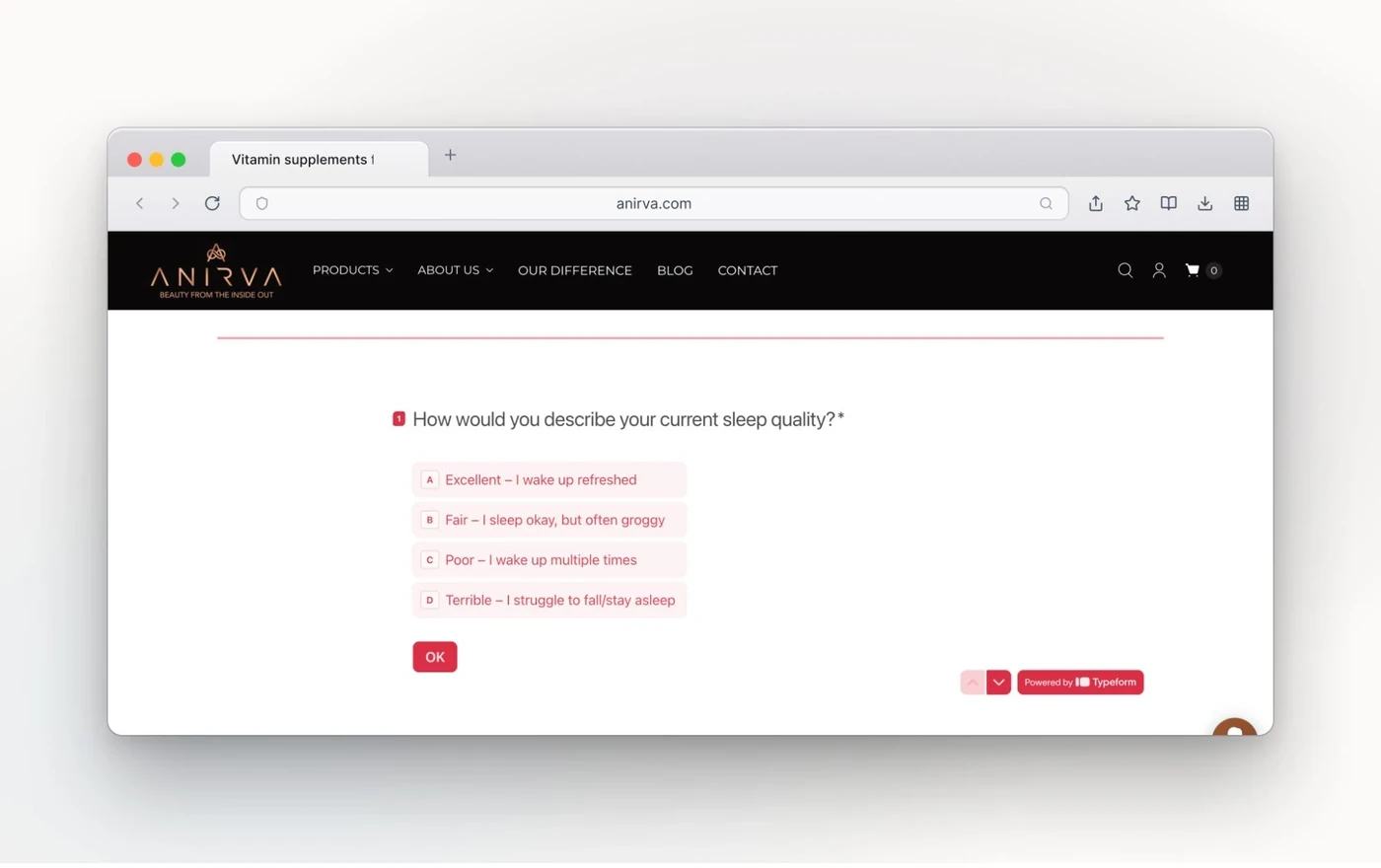
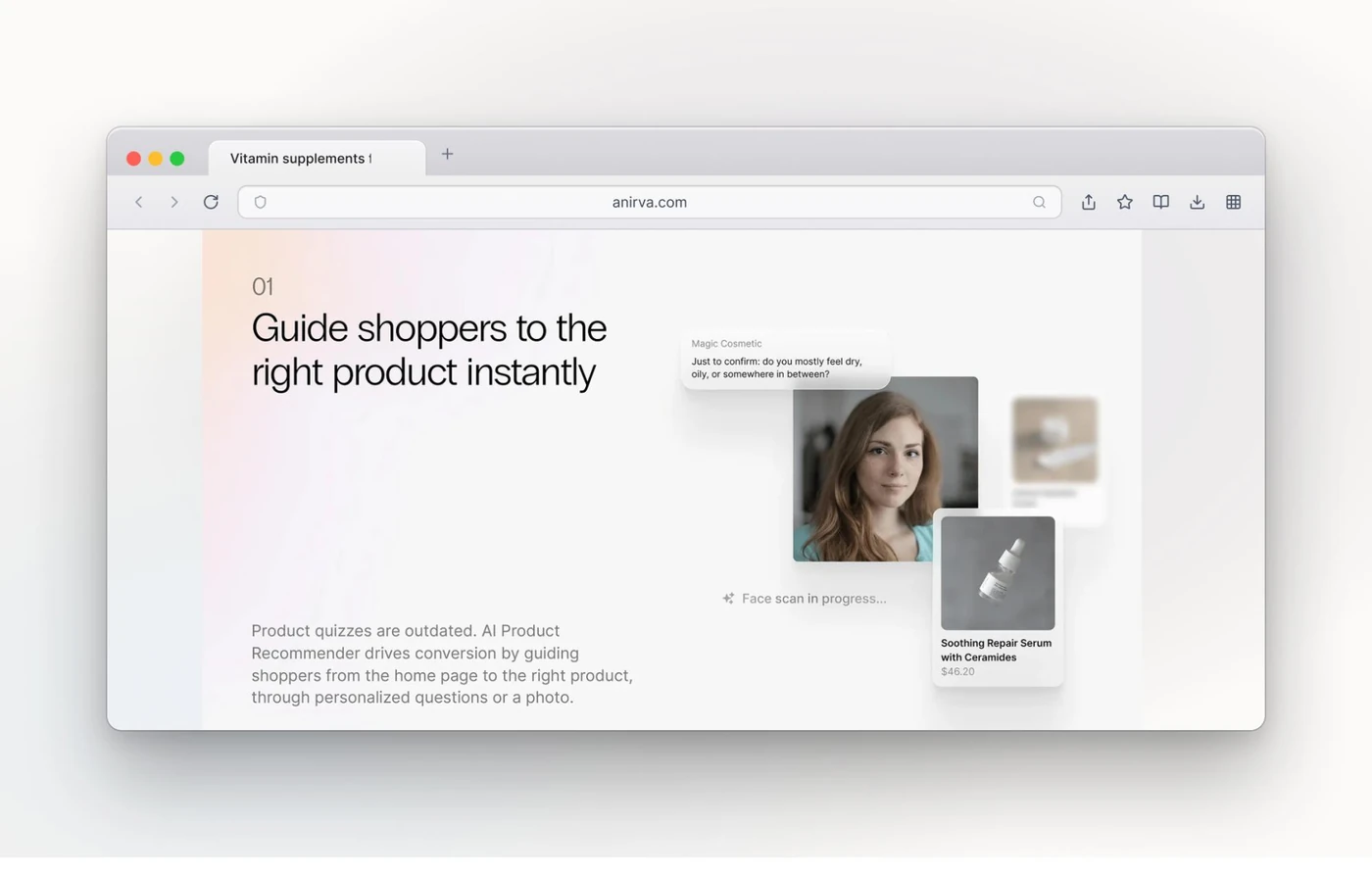
A quiz powered by Typeform for the vitamin store Anirva.
What reviewers say about Typeform
Based on G2, where Typeform holds 4.5/5 across more than 1,000 reviews, here is the pattern. (We did not find Shopify app reviews, because Typeform doesn't have a Shopify app.)
Main pros:
Well-known and trusted, with a polished design.
Easy to build, even for non-technical teams.
A free plan and broad integrations lower the barrier to entry.
Main cons:
The static decision tree has no AI, so it never adapts.
Every catalog change means updating the quiz by hand.
No live catalog connection and no post-recommendation questions.
Demo video of Typeform
Dialog, best for mid-market and premium brands with complex products
What is Dialog?
Dialog is an AI sales agent for e-commerce. Where the other tools build quizzes, Dialog runs a conversation. Its Personal Shopper sits as a dedicated entry point on your store, such as "Find your perfect product" or a skin diagnostic, and guides the shopper to the right item.
Its best fit is mid-market and premium brands with complex, high-consideration catalogs, the kind of product a customer needs to understand before buying. It works with brands including Shiseido, Oh My Cream, Delsey, and MG Motor.
Why Dialog is a good Shopify quiz builder
It generates the conversation, not a rigid tree. You define the goal in a prompt, and the AI asks questions conversationally, adapting the wording and skipping irrelevant ones.
It reads your live catalog. Recommendations stay in sync with your inventory automatically, with no manual outcome mapping.
It accepts photos. A shopper can upload a picture of their skin, their living room, or a style they like, and get a matching recommendation.
The conversation continues after the recommendation. Unlike a quiz, the shopper can keep asking questions, and Dialog captures the email or phone with explicit opt-in for reengagement through Klaviyo, Brevo, and others.
It is a standalone product. You do not have to buy a whole suite, and the analytics surface the exact questions your buyers ask.
The honest limits: because it is standalone, it will not centralize all of your marketing stack in one place, and it is a newer product than some of the legacy quiz tools.
What reviewers say about Dialog
Dialog holds 5.0/5 across 32 Shopify reviews and 5/5 across 10 G2 reviews. Both counts are still small, so treat the scores as early signal rather than a large sample.
Main pros:
A standalone tool, so there is no forced suite purchase.
A 360-degree view of the store, ingesting catalog, internal docs, and SEO content.
Detailed analytics that reveal what buyers actually ask.
Main cons:
Not a full suite, which is a drawback if you want everything centralized.
A newer product compared with legacy quiz solutions.
Demo video of Dialog
Recomma, best for small stores on a budget
What is Recomma?
Recomma is a bootstrapped, Shopify-native quiz builder launched in 2024. Its whole pitch is fair pricing and simplicity, aimed squarely at small Shopify merchants who want a solid quiz without a complicated tool.
It is a drag-and-drop builder with no AI and no catalog knowledge. The main strength is the price.
Why Recomma is a good Shopify quiz builder
The pricing is hard to beat. A free plan covers a first quiz, and paid plans start at $15 per month with per-response caps that keep costs predictable.
It is genuinely beginner-friendly. Reviewers with no technical background report building their first quiz without trouble.
Support goes the extra mile.
It integrates with the essentials. Klaviyo, Omnisend, Mailchimp, Recharge, and Zapier are all supported for data capture and follow-up.
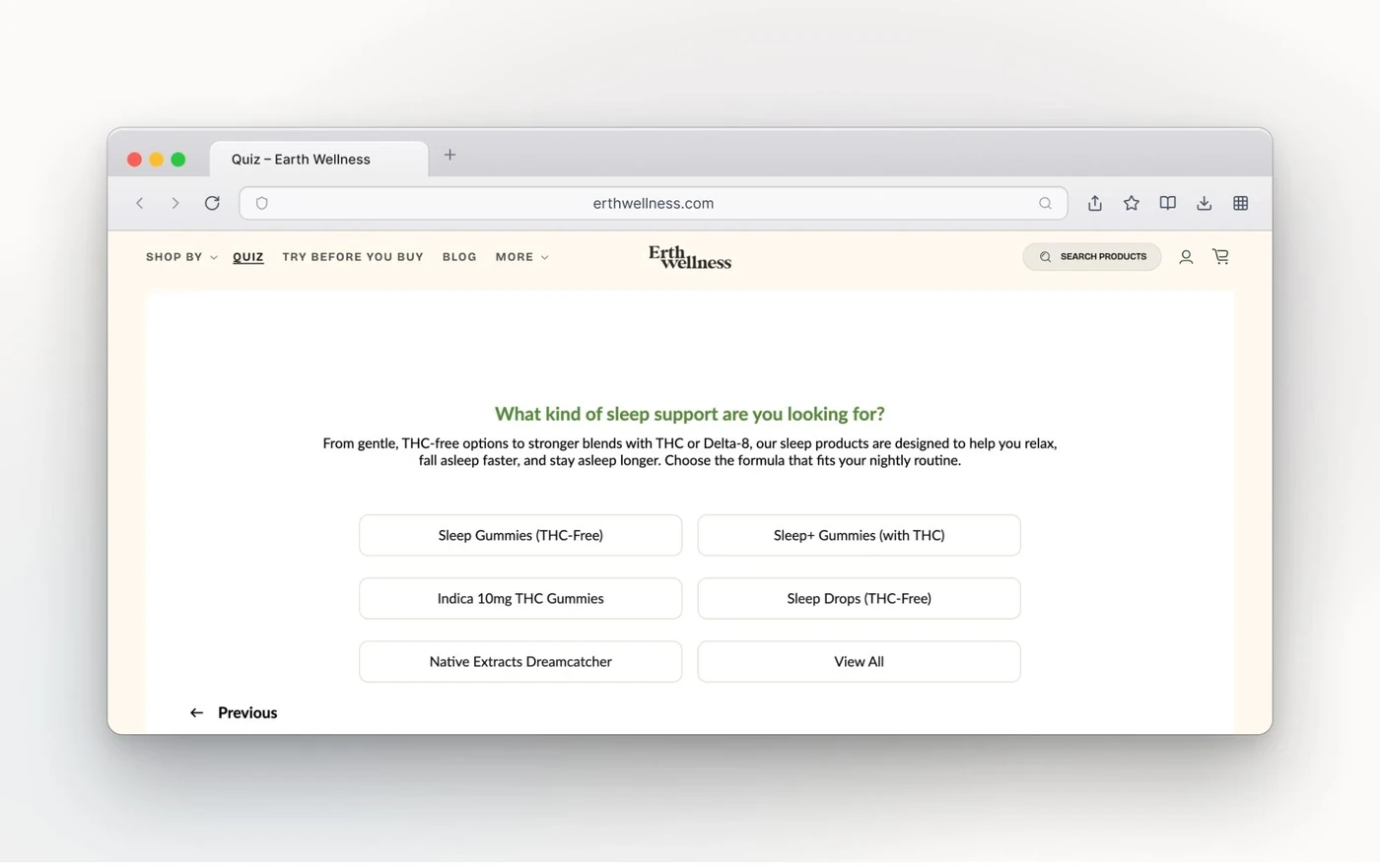
A quiz built with Recomma on Erth Wellness.
What reviewers say about Recomma
Based on its Shopify listing, where Recomma holds 4.9/5 across 84 reviews, the picture is very positive. It is not listed on G2 yet, so Shopify reviews are the main source.
Main pros:
Fast, hands-on support that resolves issues quickly.
Easy, intuitive setup for first-time quiz builders.
Strong value, with real customization available on request.
Main cons:
Occasional setup bugs that need a support assist.
Some capabilities require custom development rather than working out of the box.
No AI, no live catalog awareness, and manual updates as your range changes.
Demo video of Recomma
Octane AI, best for beauty and wellness brands
What is Octane AI?
Octane AI is one of the most common quiz apps on Shopify. It started as a chatbot for celebrities (unexpected, I know) and pivoted into a Shopify quiz builder, and today it focuses on beauty, health, and wellness brands that want a native quiz with strong SMS and email capture.
It sits between the manual and AI camps. The core builder is a conditional decision tree, but it layers AI features on top, including product recommendations, dynamic copy, and photo analysis that can read skin tone, undertones, and hair color.
Why Octane AI is a good Shopify quiz builder
It is Shopify-native with deep marketing integrations. Native Klaviyo, Attentive, and Postscript connections make zero-party data capture and follow-up flows easy.
The quiz logic is powerful. Reviewers describe robust flows and conditional logic once the quiz is built.
AI add-ons extend the basics. Smart Products, Smart Copy, and image analysis add personalization the pure form builders lack.
It has strong brand references. Bambu Earth, Primal Kitchen, and Laura Geller run on it.
The honest limit: the interface feels dated, the quiz builder can be clunky, and the AI runs as add-ons rather than a true conversation. Pricing also runs higher than the budget tools, starting at $50 per month and scaling with credit usage.
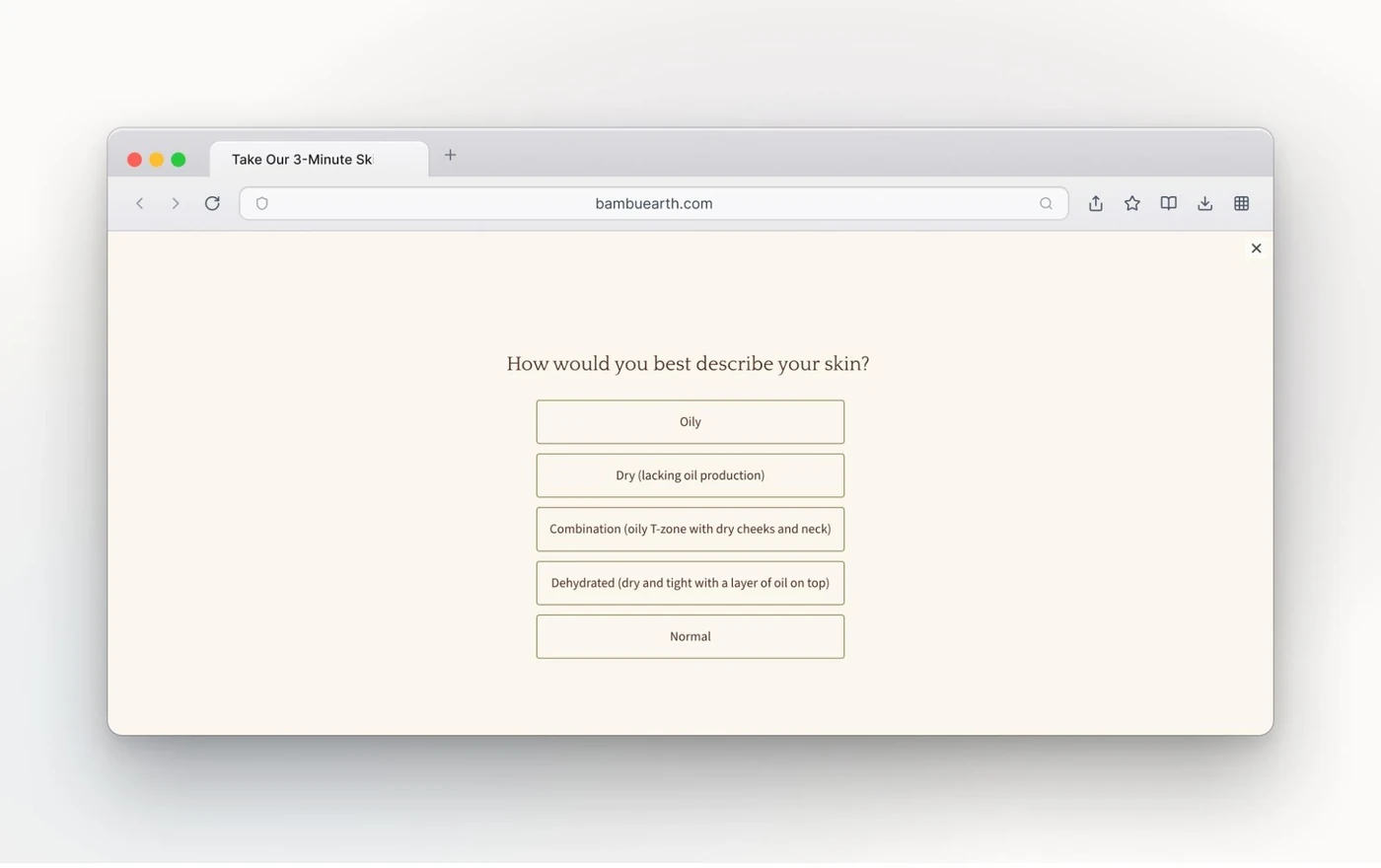
An Octane AI quiz on Bambu Earth.
What reviewers say about Octane AI
Based on its Shopify listing (4.9/5 across 182 reviews) and a thinner G2 profile (4.2/5 across 9 reviews), here is the pattern.
Main pros:
Standout, hands-on customer support is the number one theme.
Easy and intuitive to set up for a first quiz.
Drives measurable results in revenue, conversions, and email opt-ins.
Main cons:
The interface can feel clunky, and complex quizzes take time to build.
The AI logic can misfire and occasionally needs manual workarounds.
Design and analytics options feel limited, and the live catalog is not connected in real time.
Demo video of Octane AI
Constructor, best for enterprise retailers
What is Constructor?
Constructor is an AI-powered search and product discovery platform built for enterprise e-commerce. Quizzes are one feature inside a much larger suite that includes AI search, browse, recommendations, and retail media. Its customers include Gap, Under Armour, Sephora, and Bath & Body Works.
Its quiz, released in 2022, is designed to feel like speaking with an in-store consultant, and it feeds results back into the retailer's wider targeting.
Why Constructor is a good Shopify quiz builder
You build quizzes without developers. You design the content, flow, and conditional logic in the dashboard, and validate with an in-dashboard preview before going live.
The logic is genuinely adaptive. Questions branch on previous answers to sharpen the recommendation.
It is highly customizable. A quiz API lets teams fully control the look and feel.
It plugs into a full discovery engine. Quiz data can flow into search, browse, and recommendations across the site.
The trade-off is scope and cost. Constructor is an enterprise platform with no public pricing, so the quiz comes bundled with a much larger commitment.
What reviewers say about Constructor
Based on G2, where Constructor holds 4.8/5 across 58 reviews, the feedback is strong, though it covers the whole platform rather than the quiz alone. There are no public Shopify reviews to complement it.
Main pros:
AI and machine-learning ranking that learns from real user behavior.
Easy to use, even for non-technical business users.
Drives measurable revenue and conversion lift, with powerful merchandising control.
Main cons:
Analytics and data export could be more robust.
Catalog and data-feed management can be fiddly.
Changes are not always instant, and A/B testing granularity is limited.
Demo video of Constructor
How to make the most of your ecommerce quizzes
Choosing a builder is half the job. These four practices decide whether your quiz earns its keep.
1. Feature your quiz prominently
A quiz buried at the bottom of a page cannot convert the shoppers who never scroll to it. Placement is leverage.
The CRO consultancy Convertibles proved this with a nine-figure makeup brand. They moved a shade-matching quiz from a low text link to the top of the mobile mega menu, with product imagery, a "Find your perfect match" headline, and a clear "Take a quiz" button. The winning version drove an extra $101,495 in monthly revenue (source: convertibles.dev).
The lesson is simple. If a quiz is a high-value asset for your store, give it high-visibility placement.
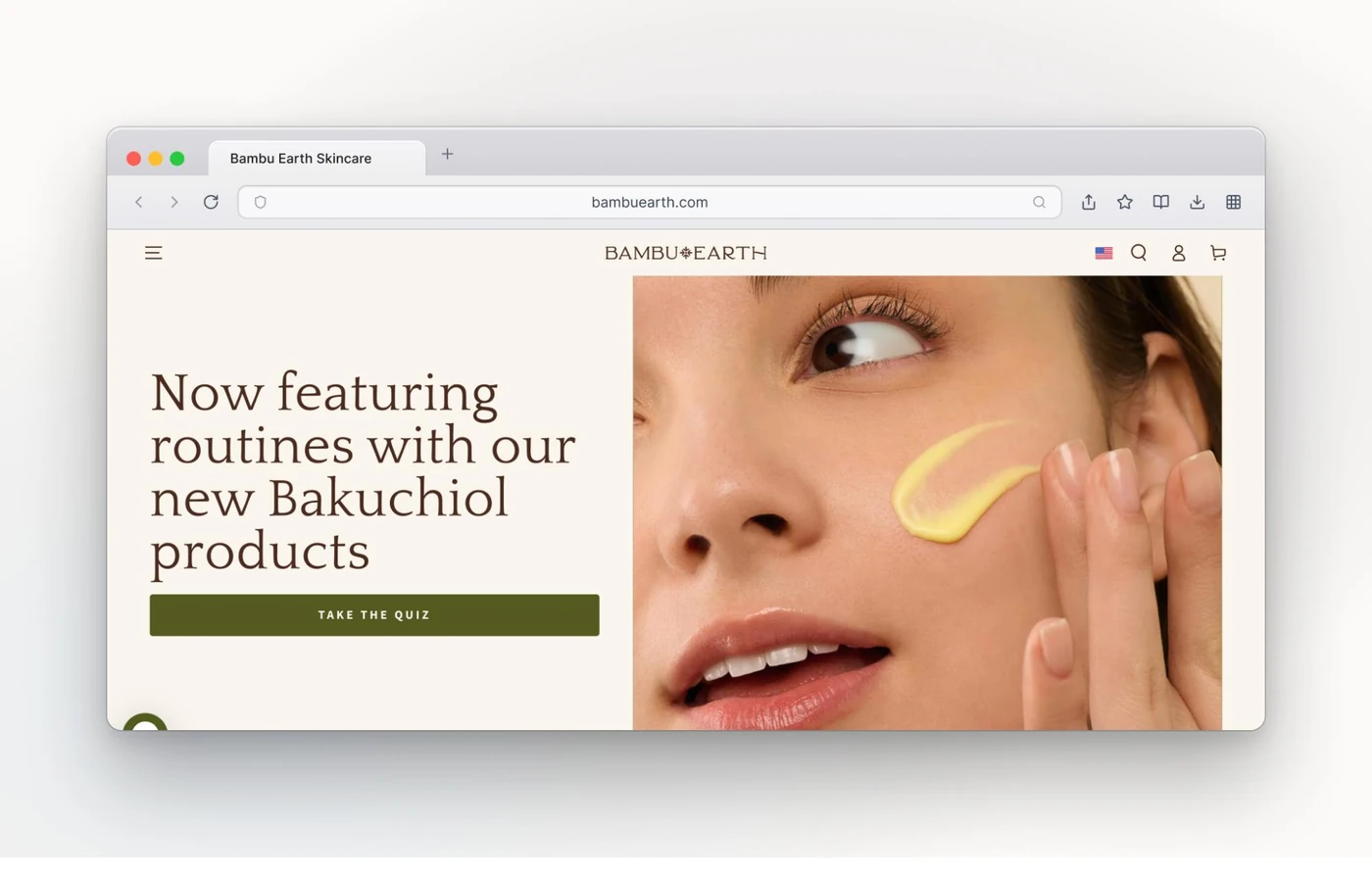
Bambu Earth features a full width banner on their homepage inviting their shoppers to take a quiz.
2. A/B test your quiz placements
Do not assume you know the best spot. Test it.
Try the quiz in your main navigation, as a homepage banner, on relevant product pages, and as an exit-intent popup. Measure quiz starts, completion, and revenue per visitor for each placement, then double down on the winner.
3. A/B test a manual quiz against an AI quiz
The bigger question is not where the quiz sits, but what kind of quiz it is.
When Dialog ran a head-to-head test against a Typeform-style quiz for the brand Karakare, its AI Personal Shopper delivered a 14.5% lift in revenue per visitor. On mobile specifically, the gap widened to a 16.1% lift in conversion rate and a 16.6% lift in revenue per visitor. This is a single-customer result, so read it as directional rather than universal, but it points to a real difference between a static tree and a live conversation.
4. Monitor the conversations to improve
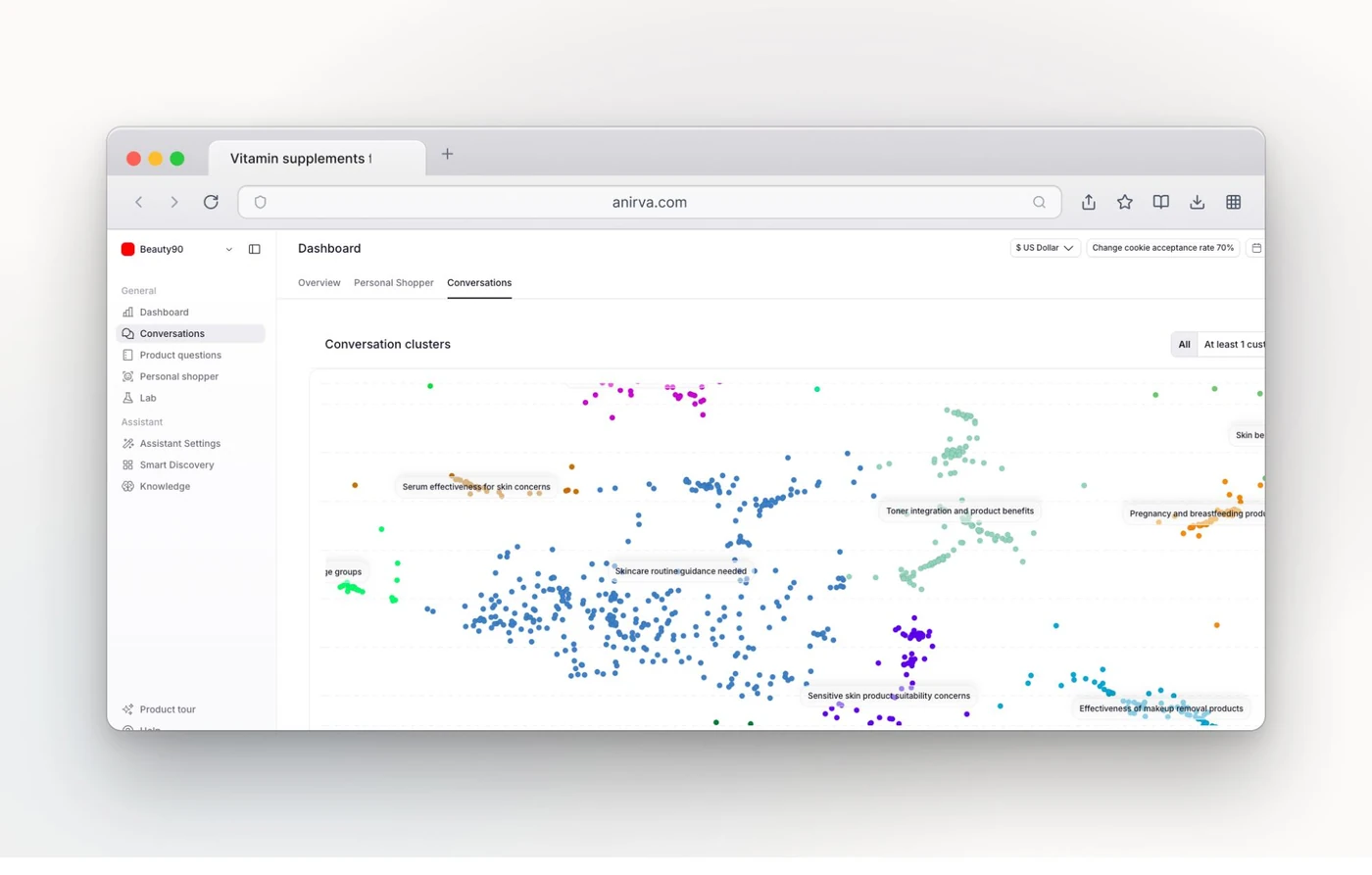
An AI quiz gives you something a static form cannot: a transcript of what your shoppers actually ask.
Review those conversations regularly. They surface the objections, the missing product details, and the new questions you have not answered yet. Feed that back into your product pages, your documentation, and the quiz itself, and the tool gets sharper over time.
Conclusion
The best Shopify quiz builder depends on your catalog, your budget, and how much manual work you are willing to own.
Choose Typeform if you are starting out or run a content-led team that wants a familiar, low-cost quiz and can live with static logic.
Choose Dialog if you are a mid-market or premium brand with complex products, and you want an AI that holds a real conversation, reads your live catalog, and keeps helping after the recommendation.
Choose Recomma if you are a small Shopify store that wants a clean, well-supported quiz at the lowest predictable price.
Choose Octane AI if you are an established beauty or wellness brand that wants a proven Shopify-native quiz with deep SMS and email capture.
Choose Constructor if you are an enterprise retailer that wants quizzes inside a full AI search and discovery suite.